Aller au contenu principal

Top Electric Motor Types for House Use

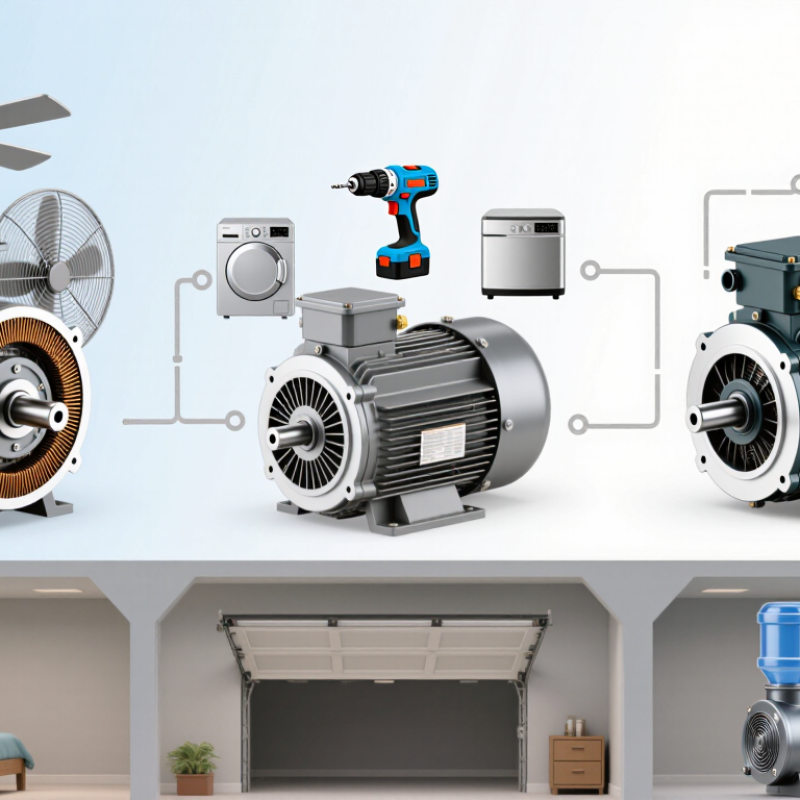
Choosing the right motor for home use starts with the job, not the label. A ceiling fan, washing machine, water pump, and workshop drill all place different demands on their motors. Speed control, starting torque, noise, and energy use can matter more than peak power. Small details count. A pump beside a bedroom, for example, may need quieter operation than one in a garage.

This guide explores common electric motor types used around the house, including induction, universal, and brushless DC motors. Each has practical strengths and trade-offs. Induction motors are often valued for steady, durable operation, while universal motors can deliver strong speed in compact appliances. Brushless designs may offer efficient control, but they can cost more and depend on compatible electronics. There is no single best choice.

The phrase electric motor house can describe a broad range of residential applications, from ventilation to home tools. To compare options fairly, check the appliance’s specifications, duty cycle, supply voltage, and installation requirements. Manufacturer documentation is the most dependable starting point. A motor that looks suitable on paper may still be a poor fit if it runs continuously, overheats, or produces unwanted vibration. That part is easy to overlook. The sections ahead explain what each type does, where it commonly appears, and which questions help homeowners make a careful, informed choice.
Top Electric Motor Types for House Use

Common Electric Motor Types Used in Homes

Homes use several electric motor types, each matched to a different task. Induction motors power ceiling fans, exhaust fans, pumps, and older appliances. They use rotating magnetic fields and usually need little maintenance. Universal motors provide high speed and strong starting torque. Vacuum cleaners, mixers, and compact appliances commonly use them. They are small and powerful, but their brushes wear over time. That trade-off matters.

Brushless DC motors appear in modern fans, compressors, and ventilation systems. Electronic controls adjust speed smoothly and can reduce energy waste during light use. Refrigerator compressors may use inverter-driven motors for steadier cooling and fewer starts. Synchronous motors suit timers and small devices requiring consistent speed. During practical inspections, heat, vibration, and airflow often reveal problems early. Still, symptoms can mislead. A blocked filter may imitate a weak motor.

Tips: Match the motor to its duty cycle, not only its wattage. Check voltage, enclosure, and starting current before replacement. Keep vents clear, clean fan blades, and listen for new humming or scraping. A warm housing is not automatically dangerous, but burning smells require immediate shutdown. Dust buildup is easy to underestimate. Sometimes, the motor is healthy, while poor cooling causes the trouble. Use a qualified technician when live testing feels uncertain.

How AC Induction Motors Power Household Appliances

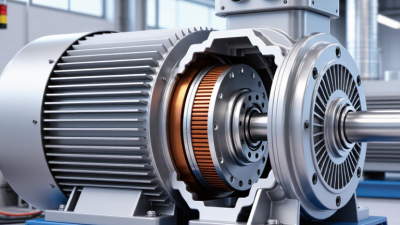
AC induction motors quietly power many household appliances, including fans, pumps, refrigerators, and washing machines. Their operation begins when alternating current creates a rotating magnetic field inside the stator. This field induces current in the rotor without direct electrical contact. The rotor then follows the magnetic field and produces mechanical motion.

This design is durable because it uses few wearing electrical parts. There are no brushes or commutators to replace. In a ceiling fan, the motor turns the blades smoothly for hours. In a washing machine, it handles changing loads during washing and spinning. A refrigerator compressor also depends on controlled motor rotation to circulate refrigerant.

Practical inspection matters. A healthy induction motor usually runs with a steady hum and limited vibration. Excessive noise may indicate worn bearings, loose mounts, or an overloaded appliance. Heat deserves attention too. Warm housing can be normal, but persistent overheating may signal poor ventilation or electrical faults. These motors are efficient, but not perfect. They can draw a higher starting current and may lose efficiency under heavy loads. Modern household controls can reduce this weakness, although they add electronic complexity. Service decisions should follow the appliance manual and qualified electrical guidance. Safety comes before curiosity.

Where Universal Motors Deliver High-Speed Performance

Top Electric Motor Types for House Use

Where Universal Motors Deliver High-Speed Performance

Universal motors are useful when a household appliance needs strong torque in a compact body. They operate with AC or DC power and can reach very high speeds. This makes them suitable for vacuum cleaners, kitchen mixers, hair dryers, and some handheld tools. Their fast rotation can move air quickly or spin blades efficiently. In practical use, however, high speed often brings more noise and vibration. Carbon brushes also wear over time, especially under frequent, heavy loads.

A universal motor responds quickly when starting. That benefit feels clear when a mixer handles thick dough or a vacuum meets a dense carpet. Yet speed alone does not guarantee good performance. Proper ventilation helps prevent heat buildup, while a suitable duty cycle protects the windings and brushes. Some appliances require electrical filtering to reduce interference. I have seen compact designs sacrifice quiet operation for power. That trade-off is easy to overlook. A quieter motor may be better for daily indoor use.

Tips: Check the appliance’s rated voltage and operating time. Keep air vents free from dust. Avoid running the motor continuously beyond its instructions. Listen for unusual sparking, burning smells, or sharp vibration. Stop using it if these signs appear, and seek inspection from a qualified technician. Simple maintenance matters. Safety should remain the deciding factor.

Top Electric Motor Types for House Use - Where Universal Motors Deliver High-Speed Performance

Motor type Typical speed and supply Starting and speed characteristics Efficiency and noise Maintenance Common household uses
Universal motor Often several thousand to over 20,000 rpm, depending on load and design; operates on AC or DC. High starting torque and very high operating speed. Speed can change substantially with load; unloaded operation can cause excessive speed. Typically noisier and less efficient than many induction or electronically controlled designs, especially at high speed. Brushes and commutator wear and may require inspection or replacement. Portable mixers, vacuum cleaners, hand tools, and other compact appliances needing high speed or strong starting torque.
Single-phase induction motor (capacitor-start or capacitor-run) Commonly around 900–3,600 rpm, depending on pole count and 50/60 Hz supply. Capacitor-start designs provide strong starting torque; capacitor-run designs provide smoother operation. Speed is comparatively steady under normal loads. Generally quieter and more efficient than a universal motor in comparable steady-duty applications. Usually low; some designs use a start capacitor or switch that can require service. Pumps, compressors, workshop equipment, and selected larger home appliances.
Permanent split capacitor (PSC) induction motor Commonly around 900–1,800 rpm for typical fan designs; varies with pole count and supply frequency. Runs smoothly with a capacitor continuously connected. Starting torque is generally moderate rather than high. Often quiet and suitable for continuous operation at a fixed speed. Low; the capacitor is a potential service item. Ceiling and ventilation fans, air-handler fans, and other steady-duty fan applications.
Split-phase induction motor Commonly around 900–3,600 rpm, depending on pole count and 50/60 Hz supply. Moderate starting torque; typically designed for applications that start without a heavy load. Reliable for intermittent operation, though starting can be noisier than with some capacitor-start designs. Low; a centrifugal starting switch may need service over time. Small pumps, older appliances, and light-duty equipment.
Shaded-pole induction motor Often around 900–1,800 rpm, depending on pole count and supply frequency. Simple self-starting design with low starting torque; speed is largely set by supply frequency and motor pole count. Simple and quiet at low power, but generally less efficient than larger induction-motor designs. Very low; commonly built without brushes or a starting switch. Small fans, compact blowers, and low-power household ventilation devices.
Brushless DC (BLDC) motor Speed varies widely by design and electronic controller; household models may operate from low speed to several thousand rpm. Electronic control enables adjustable speed and good torque control across a useful operating range. Often efficient and quiet, particularly when operated at reduced speed. Low mechanical maintenance because there are no brushes; the controller is an additional electronic component. Variable-speed fans, cordless appliances, and electronically controlled household equipment.

Note: Speed and performance figures are typical examples, not fixed specifications. Actual values depend on motor design, load, pole count, supply frequency, and control method. A universal motor’s high speed is useful for compact appliances, but its speed should be controlled by the appliance design.

Why Brushless DC Motors Suit Modern Home Devices

Brushless DC motors suit many modern home devices because they combine efficient operation with precise speed control. They use an electronic controller to switch current, rather than carbon brushes rubbing against a rotating commutator. Fewer rubbing parts can mean less brush wear and less maintenance over time. The controller can also adjust motor speed to match the task.

In a ceiling fan, that can help maintain a steady breeze without wasting as much energy at lower speeds. In a cordless vacuum, quick speed changes can support different floor surfaces. Quiet matters. Still, the motor is only part of the sound story; airflow, bearings, and the device housing matter too. No motor is magic. Brushless designs need control electronics, which can add cost and create another component that may need repair. A useful comparison should consider the whole appliance, not just its motor. For home use, a well-matched brushless motor can offer efficient, responsive operation, but the quality of its controller and cooling design makes a real difference.

Choosing the Right Motor for Household Applications

Choosing a household motor starts with the job, not its label. A ceiling fan runs for hours, so quiet operation and low-speed efficiency matter. A pump may start against water pressure, making starting torque important. Induction motors are often durable choices for steady, fixed-speed tasks. Brushless DC motors suit variable-speed appliances, where electronic controls can adjust output. Universal motors are compact and powerful, but can be noisier. Small details matter.

Check the appliance’s duty cycle, speed range, starting load, and available power before comparing motor types. The IEA’s 2011 report, Energy-Efficiency Policy Opportunities for Electric Motor-Driven Systems, estimated that motor-driven systems use about 45% of global electricity. That figure covers many sectors, not just homes, but it shows why motor efficiency deserves attention. The U.S. Energy Information Administration’s 2020 Residential Energy Consumption Survey separates household energy use by end use; cooling, laundry, and pumping therefore call for different operating profiles. Also check the full appliance’s efficiency rating, not only its motor. A highly efficient motor may still perform poorly in a mismatched design. I’d give noise and repairability more weight than I once did. There is no perfect pick.

Top Electric Motor Types for House Use — Choosing the Right Motor for Household Applications

Typical motor power ranges vary by appliance and design. The chart shows approximate representative ranges, not fixed limits.

Shaded-pole and PSC motors commonly serve fans and other light-duty appliances. Split-phase and universal motors cover many higher-power household uses, while BLDC motors are found across a broad range of appliances where efficient, controllable operation is useful. Choose a motor based on the appliance’s required power, starting behavior, speed control, and operating conditions.