Aller au contenu principal

China Best Electric Motor House Suppliers for Global Buyers?

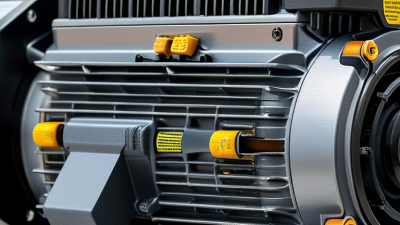
Choosing China’s best electric motor house suppliers requires more than comparing prices and product photographs. Global buyers need evidence from the factory floor. That means reviewing winding equipment, rotor balancing records, insulation tests, efficiency data, and production consistency. A reliable supplier should explain its motor design clearly. It should also provide samples before large orders begin.

Professor Thomas A. Lipo, a respected electric-machine researcher, states, “Motor design is always a compromise between performance, cost, and manufacturability.” That principle remains useful when evaluating an electric motor house in China. A low quotation may hide thinner laminations, weaker bearings, or limited testing. Small details matter. Listen for uneven noise. Check temperature rise after continuous operation. Inspect terminal boxes, shaft tolerances, and nameplate accuracy.

Certification is important, but paperwork alone cannot prove factory capability. Buyers should verify test reports, traceable materials, export experience, and after-sales response times. Factory videos help. Independent inspections help more. A supplier that welcomes technical questions usually inspires greater confidence.

Still, no sourcing guide can remove every risk. Some buyers focus too heavily on unit price. Others trust polished websites too quickly. That is a mistake. The strongest partnership grows through samples, measurable specifications, honest communication, and repeated performance checks. This guide examines China’s leading electric motor house suppliers from that practical perspective, helping global buyers make a decision that survives real operating conditions.
China Best Electric Motor House Suppliers for Global Buyers?

Electric Motor House Suppliers: Industry Scope and Product Categories

Electric motor house suppliers serve factories, agricultural systems, pumps, conveyors, fans, and automated equipment worldwide. Their industry scope includes motor manufacturing, custom engineering, component sourcing, testing, and export support. Some suppliers build complete motor assemblies, while others provide controllers, gearboxes, brakes, and replacement parts.

Product categories usually include AC induction motors, permanent-magnet motors, brushed DC motors, brushless DC motors, synchronous motors, servo motors, and geared motors. AC motors suit pumps and production lines because they offer stable operation and simple maintenance. Brushless designs reduce brush wear and support compact equipment. Servo motors provide accurate positioning for robotics and packaging machinery. Gear motors deliver higher torque at controlled speeds.

Small details matter. Reliable suppliers specify voltage, frequency, rated power, speed, duty cycle, insulation class, and protection level. They should also provide dimensional drawings, test records, material information, and suitable compliance documents for the target market. In practical sourcing, a motor’s nameplate rating may not match real operating conditions. Heat, dust, frequent starts, and unstable loads can shorten service life. I have seen buyers choose by price alone, then replace motors repeatedly. That approach deserves reflection. Ask about winding quality, bearing selection, noise testing, spare parts, and technical support. A transparent supplier explains limits, not only advantages.

Key Standards for Evaluating Chinese Motor House Manufacturers

China Best Electric Motor House Suppliers for Global Buyers?

Choosing Chinese electric motor housing manufacturers requires more than comparing quoted prices. A reliable supplier should explain its casting, machining, coating, and inspection processes clearly. Ask for material certificates, dimensional reports, and batch traceability. Housing materials must match the motor’s heat, vibration, and corrosion conditions.

Request drawings with tolerances, surface-finish requirements, and critical sealing dimensions. A capable factory should use calibrated coordinate measuring machines, gauges, and documented sampling plans. It should also understand relevant IEC requirements and market rules, including restricted-substance controls when applicable. Factory audits matter. A clean workshop helps, but process records matter more.

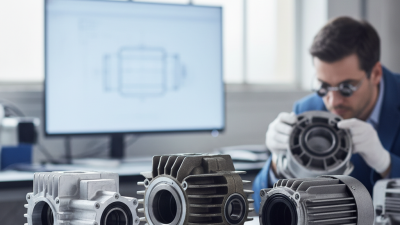
I have found that sample approval can reveal hidden weaknesses. Check wall thickness, bearing-seat alignment, thread quality, and paint adhesion. Test assembled housings under realistic temperature and vibration conditions. Short videos are useful, but they are not proof. A certificate alone proves little. Ask how nonconforming parts are isolated and corrected. Some suppliers respond quickly before receiving an order, then become slower after production starts. That risk deserves attention. No manufacturer is perfect, and even a careful audit may miss an unstable process. Use clear acceptance criteria, written change-control rules, and regular quality reviews to reduce surprises.

Manufacturing Capabilities, Quality Control, and Certification Requirements

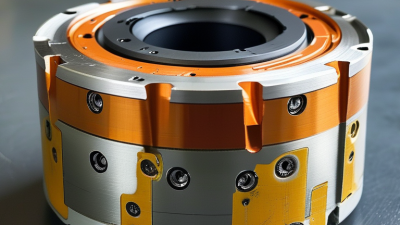
Choosing a reliable Chinese electric motor housing supplier requires more than comparing unit prices. Strong manufacturers should offer die casting, aluminum casting, CNC machining, heat treatment, and surface finishing. Their equipment must support stable wall thickness, accurate mounting holes, and consistent concentricity. These details directly affect motor noise, vibration, and service life.

Quality control should begin with incoming alloy inspection and material traceability. A spectrometer can verify chemical composition before production starts. During machining, coordinate measuring machines check critical dimensions. Pressure or leak testing may be necessary for sealed housings. Coating adhesion, hardness, and surface defects also deserve documented inspection. Small errors matter. Sample approval alone is not enough.

Certification requirements depend on the final application and destination market. ISO 9001 demonstrates a controlled quality system, but it does not guarantee perfect products. Automotive projects may require IATF 16949 practices and formal production approval records. Environmental declarations, such as RoHS or REACH compliance, should include current material evidence. Buyers should verify certificate scope, issuing body, site address, and expiry date. I have seen suppliers present valid certificates for a different factory. That weakness is easy to miss. A practical audit should review calibration records, corrective actions, batch labeling, and retained samples. The fastest quote is not always the safest choice.

China Electric Motor Supplier Evaluation: Efficiency and Compliance Benchmarks

For global buyers, supplier selection should combine manufacturing capability, quality control, and certification readiness. The chart shows the minimum efficiency values defined by IEC 60034-30-1 for a 7.5 kW, 4-pole, 50 Hz motor across IE efficiency classes. Buyers should also verify applicable market requirements such as CE, UKCA, UL/cUL, CCC, RoHS, ISO 9001, and documented factory testing.

Export Services, Customization Options, and Global Buyer Support

China Best Electric Motor House Suppliers for Global Buyers?

Export support should begin with technical clarity, not a sales promise. The International Energy Agency estimates that electric motor systems consume nearly half of global electricity. This makes efficiency, maintenance, and correct sizing important purchasing issues. Experienced suppliers should provide rated voltage, frequency, torque curves, insulation class, efficiency data, and tested operating limits. A clear datasheet prevents costly misunderstandings at customs and during installation.

Customization can cover shaft dimensions, mounting positions, brake systems, cooling methods, cable exits, and control compatibility. Suppliers serving global buyers should confirm regional voltage standards and provide drawings before production. Small details matter. A 2-millimeter shaft error can delay assembly. Factory acceptance testing, serial-number records, packing photographs, and inspection reports also improve traceability. The U.S. Department of Energy reports that motor-driven equipment uses over 70% of industrial electricity in the United States, so efficiency verification deserves more than a checkbox.

Reliable export service includes multilingual communication, HS-code assistance, commercial invoices, wooden-case specifications, and delivery updates. Support should continue after shipment, with installation guidance and spare-parts advice. ISO 9001-based quality procedures can strengthen consistency, but certification alone proves little without records. In practice, some suppliers still overstate customization. Buyers should request samples, test conditions, and reference projects. This takes time. It may prevent a much larger failure. Data from the IEA and U.S. Department of Energy should guide evaluation, while each motor must still be judged against its actual load.

China Best Electric Motor House Suppliers for Global Buyers? - Export Services, Customization Options, and Global Buyer Support

Practical comparison framework for evaluating China-based electric motor suppliers. Figures are typical industry ranges or commonly available specifications and should be confirmed in the supplier’s quotation, technical datasheet, and compliance documents.

Evaluation Dimension Export-Ready OEM/ODM Motor Manufacturer Industrial Motor Specialist Pump and Fan Motor Specialist Small Appliance Motor Manufacturer
Typical Product Scope AC motors DC motors Gear motors Custom assemblies Three-phase motors Brake motors Explosion-protected options Fan motors Pump motors Shaded-pole motors Capacitor motors Universal motors BLDC motors Small gear motors
Common Power Range Approximately 6 W to 315 kW, depending on the product family Approximately 0.12 kW to 1,000 kW for standard industrial ranges Approximately 6 W to 75 kW, depending on pump or fan application Approximately 3 W to 3 kW, depending on appliance and duty cycle
Common Voltage and Frequency Options Single-phase and three-phase; common markets include 110–120 V, 220–240 V, 380–415 V, and 50/60 Hz Three-phase systems commonly configured for 220–240 V, 380–415 V, 440–480 V, and 50/60 Hz Commonly 110–120 V or 220–240 V single-phase; three-phase options available for larger units Commonly 100–240 V AC or low-voltage DC, depending on the appliance design
Efficiency Class Availability IE2 and IE3 are widely available; IE4 and IE5 may be available for selected high-efficiency designs IE3 is widely used for new industrial projects; IE4 and IE5 are available for qualifying motor designs IE2 and IE3 are commonly offered; efficiency depends strongly on motor size and application Efficiency is normally specified by application rather than by the IE industrial motor classification
Protection and Insulation Options Typical options include IP54, IP55, and IP65; Class F insulation is common, with Class H available for selected designs IP55 is common for general industrial motors; higher protection levels and Class H insulation may be specified IP44, IP54, IP55, and IP65 options are commonly used according to the operating environment Protection levels vary by appliance; thermal protectors, fuses, and reinforced insulation may be included
Customization Options Housing, shaft, mounting, winding, connector, cable, brake, encoder, paint, label, and packaging customization Frame size, shaft dimensions, mounting arrangement, brake, encoder, terminal box, bearings, and cooling configuration Airflow direction, impeller, pump coupling, capacitor, cable length, mounting bracket, and thermal protection Speed, torque, shaft, gear ratio, connector, noise level, thermal protection, and compact housing design
Prototype and Sample Support Usually available for design validation before mass production Usually available; engineering review is recommended for load, duty, and thermal requirements Commonly available for airflow, pressure, temperature, and endurance testing Commonly available for fit, noise, speed, torque, and life testing
Typical Mass-Production Lead Time Approximately 30–60 days after specification approval, subject to quantity and customization Approximately 45–90 days for customized industrial motors or large orders Approximately 25–60 days for standard or moderately customized products Approximately 30–75 days, depending on tooling, electronics, and certification needs
Minimum Order Quantity Often negotiable; standard products may start from dozens of units, while custom projects may require a higher quantity Often project-based; standard motors may be ordered in small batches, while custom production may require a larger commitment Frequently suitable for small and medium batches, subject to model and packaging requirements Often requires a production forecast because tooling and dedicated components may be involved
Quality-Control Documents to Request Incoming inspection records, winding test results, no-load data, load-test reports, dimensional inspection, and final inspection records Performance curves, efficiency data, vibration results, temperature-rise records, bearing information, and routine test reports Airflow or pressure curves, noise data, thermal test results, capacitor specifications, and endurance records Speed-torque curves, current data, noise measurements, insulation tests, thermal protection tests, and life-test results
Common Compliance Documents Applicable market documentation may include CE, RoHS, REACH, EMC, and energy-efficiency declarations Applicable market documentation may include CE, IEC test reports, efficiency data, EMC documentation, and hazardous-area approvals where required Applicable market documentation may include CE, RoHS, EMC, and product-specific safety documentation Applicable market documentation may include CE, RoHS, EMC, LVD, and appliance-specific safety documentation
Export Packaging Export cartons, pallets, moisture protection, shock protection, barcode labels, and customized packaging are commonly available Heavy-duty cartons, wooden cases, anti-rust treatment, shaft protection, and lifting marks may be required for larger motors Cartons, molded protection, palletized loading, and moisture-resistant packaging are commonly available Retail-ready cartons, inner boxes, molded inserts, barcode labels, and container-optimized packing are commonly available
Shipping and Export Support Quotation support for EXW, FOB, CIF, and DDP; commercial invoice, packing list, certificate of origin, and freight coordination may be available Usually experienced with container loading, project shipments, technical customs descriptions, and heavy-cargo handling Commonly supports consolidated cargo, regular container shipments, and distributor replenishment orders Commonly supports courier samples, air freight, sea freight, and mixed-SKU shipments
Buyer Technical Support Motor selection, drawing review, wiring guidance, installation advice, troubleshooting, and spare-parts recommendations Load calculation, duty-cycle review, inverter compatibility, braking selection, bearing selection, and maintenance guidance Airflow or pump-duty matching, capacitor selection, thermal protection, noise reduction, and installation guidance Speed and torque matching, controller integration, noise reduction, wiring, and product-fit support
Best Fit for Global Buyers Importers seeking one supplier for standard products, private-label production, and customized motor assemblies Factories, system integrators, distributors, and infrastructure projects requiring continuous-duty industrial motors HVAC, ventilation, pump, refrigeration, and appliance-equipment manufacturers Consumer-product manufacturers requiring compact motors and high-volume repeat production
Key Verification Questions Can the supplier provide a drawing, sample test report, production schedule, traceability method, and export references for the target market? Can the supplier verify efficiency, vibration, temperature rise, duty cycle, inverter operation, and required protection level? Can the supplier provide tested airflow or pressure data, noise results, thermal protection details, and application references? Can the supplier confirm life expectancy, noise level, speed-torque performance, tooling ownership, and component availability?
Buyer Note: The most suitable supplier is not determined by product range alone. Before placing an order, compare the approved technical specification, test method, efficiency target, protection rating, certification scope, sample performance, warranty terms, lead time, and total landed cost.

How to Select the Best Electric Motor House Supplier in China

Selecting the best electric motor house supplier in China requires more than comparing unit prices. Motor systems consume about half of global electricity, according to the International Energy Agency’s Energy Efficiency 2023 report. Efficiency, durability, and traceable production therefore deserve serious attention.

Ask for test reports based on IEC 60034 standards. Check rated efficiency, temperature rise, insulation class, vibration, noise, and overload performance. A reliable supplier should provide production samples, factory audit access, and clear quality-control records. Request material certificates for copper, steel, bearings, and housing alloys. These details reveal whether the quoted specification is real. No supplier looks perfect on paper.

Tips: Compare at least three suppliers. Send identical technical requirements. Test samples under your actual voltage, load, and duty cycle. Confirm the motor house dimensions, shaft tolerance, sealing grade, and packaging before signing. Also review delivery records and after-sales response times. A low price can hide weak machining or unstable materials. That risk is easy to underestimate.

The U.S. Department of Energy reports that motor-driven equipment represents roughly 46% of global electricity use. Small efficiency differences can therefore affect operating costs for years. Select suppliers with calibrated inspection equipment and documented corrective actions. Ask how they handle rejected batches. Their answer may matter more than a polished showroom. Factory visits help, but they are not enough; independent testing remains wiser. Be careful with optimistic energy-saving claims. Require measured evidence, not promises.