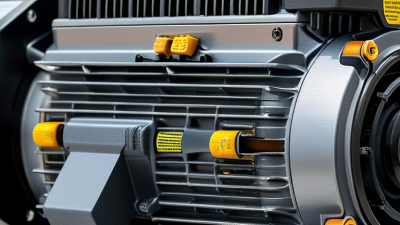
Top Electric Motor Housing Manufacturers for Global Buyers
Electric motor housing has become a strategic component, not merely a protective shell. It supports bearings, manages heat, reduces vibration, and shields sensitive windings from dust and moisture. For global buyers, these functions directly affect motor efficiency, service life, and production consistency.
The International Energy Agency reported that global electric car sales exceeded 17 million in 2024. This growth increases demand for reliable traction-motor components, including cast, machined, and lightweight aluminum housings. MarketsandMarkets also projects continued expansion in the global electric motor market through 2028. However, market reports classify housings differently. Their figures are useful, but not perfectly comparable. That limitation deserves attention.
Professor Ali Emadi, a recognized electric-mobility researcher, has stated, “The electric motor is the heart of the electric vehicle.” A housing protects that heart under severe operating conditions. It must tolerate thermal cycling, road vibration, coolant exposure, and tight assembly tolerances. Small dimensional errors can create noise, leakage, or premature bearing wear.
The manufacturers featured in this guide are evaluated through practical criteria. These include material capability, casting quality, CNC accuracy, sealing design, testing systems, and international supply experience. Certifications also matter, but paperwork alone cannot prove factory reliability. Buyers should inspect sample reports, process controls, and traceability records.
Some suppliers promote low prices first. That can be misleading. A cheaper housing may increase machining corrections, warranty claims, or assembly downtime. This guide therefore focuses on manufacturers that combine engineering depth, repeatable production, and responsive communication. The ranking is not perfect, because supplier performance can change by region, order volume, and application.
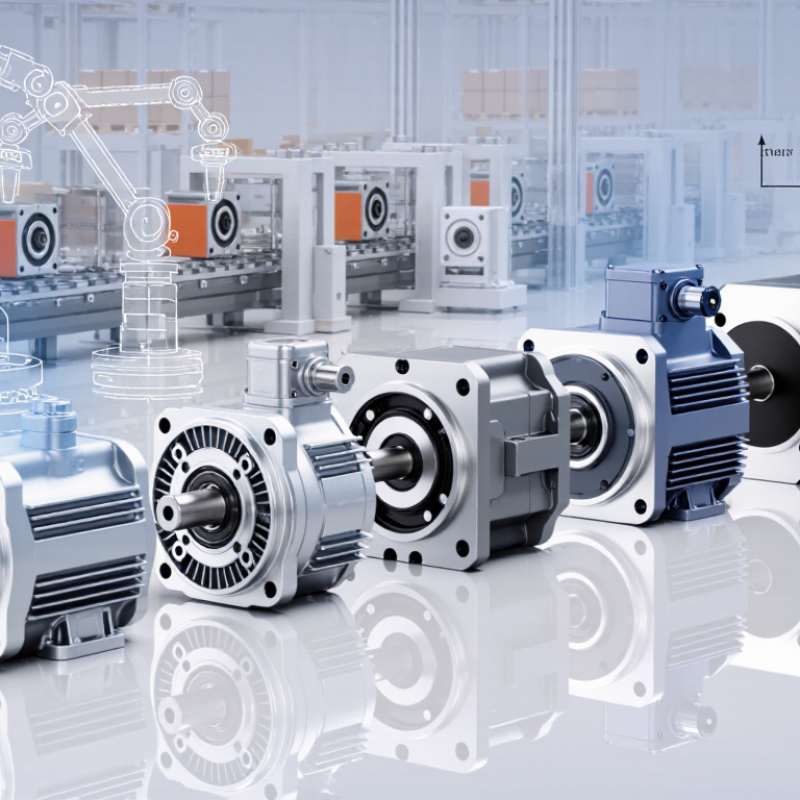
Electric Motor Housing: Definition, Functions, and Main Materials
Electric motor housing is the outer structure that supports and protects a motor’s internal parts. It usually holds the stator, shields winding assemblies, and helps maintain rotor alignment. Its machined bearing seats must remain accurately positioned during operation. Even a small dimensional error can create noise, heat, or premature wear.
A well-designed housing also manages heat. Cast iron offers strength, vibration damping, and good durability in demanding equipment. Aluminum alloys reduce weight and transfer heat quickly through ribbed surfaces. Steel provides toughness where impact resistance matters. Engineering plastics may suit compact, corrosion-sensitive applications, but their temperature limits require careful review. Lightweight is not always better.
During supplier evaluation, global buyers should inspect wall thickness, mounting holes, sealing surfaces, and internal tolerances. Look for material certificates, inspection records, and repeatable sample measurements. Corrosion protection matters in humid factories. The enclosure design should also support the required ingress protection level. Seals, cable entries, and covers must work together.
Practical checks reveal details that drawings can miss. A rough bearing seat, uneven coating, or blocked cooling rib deserves attention. Housing noise can indicate poor fit, not just a motor problem. I have found that cost-focused designs sometimes save material in the wrong area. That trade-off may reduce service life. Engineers should compare thermal performance, machining quality, assembly access, and long-term maintenance before approving a housing.
Key Criteria for Evaluating Global Housing Manufacturers
Top Electric Motor Housing Manufacturers for Global Buyers
Key Criteria for Evaluating Global Housing Manufacturers
Selecting an electric motor housing manufacturer requires more than comparing unit prices. The International Energy Agency reports that electric motor systems consume about 53% of global electricity. Small design losses can therefore create significant operating costs. Evaluate housing materials, wall thickness, concentricity, and heat dissipation together. Aluminum improves weight control, while cast iron often supports demanding industrial environments. The correct choice depends on load, speed, vibration, and installation conditions.
Ask manufacturers for measurable evidence. ISO 9001 certification supports process control, but it does not replace product testing. Request dimensional inspection records, pressure-test results, surface-treatment specifications, and material certificates. IEC 60034 standards provide useful references for motor performance and protection requirements. Check whether the supplier can maintain tolerances across repeated production runs. A perfect sample means little without stable batch quality. In practical audits, packaging and corrosion protection also deserve attention. These details are easy to overlook.
Tips: Compare total landed cost, not only the quoted price. Review tooling ownership, minimum order quantities, lead times, and spare-part support. The U.S. Department of Energy notes that motor systems can represent a major share of industrial electricity use, so thermal performance deserves careful validation. Ask for a pilot batch before signing a long-term agreement. This step may feel slow. It can expose weak machining control, unclear traceability, or poor communication before larger losses occur. Reconsider assumptions when the cheapest offer looks unusually attractive.
Leading Electric Motor Housing Manufacturers by Production Strength
Top Electric Motor Housing Manufacturers for Global Buyers
Leading electric motor housing manufacturers prove their strength through stable production, not impressive claims. Experienced plants combine casting, CNC machining, surface treatment, and final inspection under controlled procedures. Their production lines should handle repeat orders without changing dimensions or material performance. High-capacity facilities often use automated molding, robotic handling, and digital production tracking. These systems reduce delays and improve consistency across thousands of housings. Yet capacity alone is not enough. Some manufacturers run fast but document quality poorly. That gap deserves careful attention.
Tips: Ask for monthly output, machine capacity, and recent quality records. Review sample housings for wall thickness, mounting holes, surface defects, and dimensional accuracy. Check whether the factory can trace materials by batch. Confirm lead times during peak seasons, not only in quiet months. A short video tour may reveal more than polished brochures.
Reliable manufacturers also maintain clear inspection points throughout production. They test critical dimensions with calibrated tools and record corrective actions. Strong suppliers can explain how they manage aluminum alloys, cast iron, sealing surfaces, and vibration risks. They should provide realistic tolerance data rather than vague promises. Independent audits and sample approvals can support buyer confidence, especially for international projects. Still, even skilled factories may face tooling wear or shipment pressure. Honest communication about these weaknesses is often a better sign than perfect-looking reports.
Top Electric Motor Housing Manufacturers for Global Buyers - Leading Electric Motor Housing Manufacturers by Production Strength
| Manufacturer Category | Production Strength | Primary Housing Material | Main Manufacturing Process | Typical IEC Frame Range | Key Advantages | Common Applications | Relevant Quality and Technical Requirements |
|---|---|---|---|---|---|---|---|
| Large-Scale Aluminum Die-Casting Producer | Very High Highly suitable for repeat orders and standardized motor platforms |
Aluminum alloys commonly used for pressure die casting, including Al-Si-based grades | High-pressure die casting, trimming, CNC machining, leak testing, powder coating or painting | Commonly IEC 56–180 | Low weight, fast cycle times, good dimensional repeatability, strong suitability for high-volume production | Small and medium industrial motors, pumps, fans, compressors, HVAC equipment | ISO 9001 quality systems; dimensional inspection; porosity control; compliance with IEC 60034 design requirements where applicable |
| High-Volume Cast-Iron Housing Producer | Very High Strong capability for heavy-duty and continuous-production programs |
Gray cast iron, commonly EN-GJL-200 to EN-GJL-300 or equivalent grades | Green-sand casting or resin-sand casting, shot blasting, machining, pressure testing and coating | Commonly IEC 80–355 | High stiffness, vibration damping, thermal stability and durability in demanding environments | Heavy industrial motors, conveyors, machine tools, compressors and process equipment | ISO 9001; casting process control; hardness and tensile testing; dimensional inspection; corrosion-protection specifications |
| Precision CNC-Machined Housing Specialist | Medium to High Optimized for close tolerances, prototypes and engineered variants |
Aluminum alloy, cast iron or ductile iron depending on the motor design | CNC turning, milling, boring, drilling, coordinate measurement and final assembly inspection | Commonly IEC 63–315 | Flexible product changes, accurate bearing seats, reliable concentricity and strong engineering support | Servo motors, geared motors, customized drives and low-to-medium volume industrial equipment | ISO 9001; calibrated measuring equipment; geometric tolerance control; bearing-seat and shaft-axis inspection |
| Fabricated Steel Housing Manufacturer | Medium Suitable for custom dimensions and low-to-medium production volumes |
Carbon steel, stainless steel or galvanized steel sheet and plate | Laser cutting, stamping, bending, welding, stress relief, machining and protective coating | Commonly IEC 80–280 | Good design flexibility, weldability, impact resistance and suitability for special enclosures | Outdoor motors, washdown equipment, special-purpose machinery and custom industrial systems | ISO 9001; welding procedure control; coating-thickness inspection; enclosure protection requirements such as IEC 60529 when applicable |
| Ductile-Iron Heavy-Duty Housing Producer | Specialized Focused on high-load, high-impact and vibration-intensive applications |
Ductile iron, commonly EN-GJS-400 or higher-strength equivalent grades | Sand casting, heat treatment when required, CNC machining, non-destructive testing and coating | Commonly IEC 160–355 | High tensile strength, improved impact resistance and better structural performance than standard gray iron | Mining equipment, crushers, large pumps, marine auxiliaries and heavy process machinery | ISO 9001; material traceability; tensile and hardness testing; casting inspection; ultrasonic or magnetic-particle testing when specified |
| Explosion-Protected Motor Enclosure Producer | Specialized High technical requirements with controlled production volumes |
Cast iron, ductile iron or aluminum alloy selected according to the certified enclosure design | Precision casting, machining of flame paths, controlled assembly and documented inspection | Commonly IEC 80–355 | Controlled flame paths, robust mechanical construction and suitability for hazardous-area motor designs | Oil and gas, chemical processing, grain handling and other hazardous industrial environments | IEC 60079 series; applicable regional explosion-protection certification; flame-path measurement; traceability and documented production control |
| Integrated Motor Housing and End-Shield Producer | High Efficient for complete housing assemblies and synchronized supply programs |
Aluminum alloy, gray cast iron or ductile iron | Casting, CNC machining, bearing-seat finishing, end-shield production, assembly and functional inspection | Commonly IEC 63–315 | Reduced supplier coordination, matched component tolerances, shorter assembly chains and consistent bearing alignment | General-purpose motors, pumps, fans, compressors and automated production equipment | ISO 9001; IEC 60034 dimensional compatibility; bearing-seat inspection; runout, concentricity and balance-related checks |
| Small-Batch Custom Housing Manufacturer | Medium Best suited to engineering projects, replacement parts and product development |
Aluminum, cast iron, ductile iron or stainless steel according to specification | Prototype casting, 3D modeling, CNC machining, reverse engineering and batch inspection | Custom sizes; frequently based on IEC 56–355 design principles | Fast design adaptation, low tooling commitment, replacement-part capability and support for obsolete motor designs | Retrofit projects, laboratory equipment, repair markets and specialized machinery | ISO 9001 or equivalent documented quality procedures; drawing approval; material certificates; first-article and dimensional reports |
Manufacturing Processes, Quality Standards, and Customization Options
Electric motor housing quality begins with process control, not polished catalog images. Common routes include aluminum die casting, sand casting, CNC machining, and fabricated steel. Die casting supports high volumes and thin walls. CNC machining improves bearing-seat accuracy after casting. For demanding applications, engineers check wall thickness, porosity, concentricity, and thermal expansion. Practical suppliers retain sample measurements and process records for each production lot.
Quality systems should align with ISO 9001, while product tests should reflect the motor’s duty cycle. Incoming alloy checks, dimensional inspection, leak testing, and coating adhesion tests expose different risks. Salt-spray testing can support corrosion evaluations, but it cannot predict every outdoor condition. That limitation matters. Buyers should request material certificates, calibrated equipment records, inspection plans, and traceable corrective-action reports. A housing may pass visual inspection yet fail after vibration, heat, or repeated assembly.
Customization often covers mounting feet, flange geometry, cable entries, cooling ribs, finishes, and sealing features. Clear drawings should define tolerances, datums, surface roughness, and critical interfaces. Prototype runs can reveal tool distortion or machining allowances before full production. Do not over-customize without reviewing tooling cost and replacement availability. Some suppliers promise tight tolerances everywhere. That sounds impressive, but it may raise cost without improving performance. An experienced global buyer compares test evidence, communication speed, packaging, and after-sales response. Perfect control is unrealistic. Reliable manufacturing means identifying weaknesses early and correcting them openly.
How Global Buyers Can Select the Right Housing Supplier
Top Electric Motor Housing Manufacturers for Global Buyers
Selecting the right electric motor housing supplier requires more than comparing unit prices. Experienced buyers examine material grades, wall thickness, machining tolerances, sealing surfaces, and heat dissipation. A housing may look strong but fail after repeated thermal cycling. Request dimensional reports, surface-finish records, and sample parts before approving production. Ask how the supplier controls porosity, distortion, and corrosion during manufacturing. These details often reveal technical discipline better than a polished sales presentation.
Communication matters too. Confirm production capacity, tooling ownership, inspection equipment, packaging methods, and realistic lead times. A reliable supplier should explain what happens when dimensions drift or a casting defect appears. Independent factory audits can help, although audits never replace sample testing. Check whether the supplier can provide traceable material certificates and consistent inspection data for every batch. Small documentation gaps may become expensive delays later.
Tips: Compare total cost, not only the quoted price. Include tooling, freight, testing, rejection risks, and engineering changes. Ask for a pilot order with clear acceptance criteria. Keep drawings controlled and revisions numbered. Visit the production line if practical. Look closely at storage areas, calibration labels, and operator work instructions. They show daily habits. No supplier is perfect. Weaker points may appear after scale-up, so review performance after the first shipment and adjust your evaluation.
Related Posts
-
7 Tips for Choosing the Right Electric Motor House?
-
Why Is Motor Housing Important for Electric Motors?
-
China Best Electric Motor House Suppliers for Global Buyers?
-
Understanding Motor Housing: Key Factors to Consider for Optimal Performance and Longevity
-
2026 How to Choose the Right Motor Housing for Your Needs?
-
Best Electric Motor Housing Solutions for Global Buyers?