Aller au contenu principal

Why Are Latches Components Essential for Global Buyers?

Why Are Latches Components Essential for Global Buyers?

Latches Components may look small, but they control access, safety, vibration resistance, and product usability. A loose latch can expose equipment, interrupt production, or damage a customer’s confidence. Global buyers therefore assess more than unit price. They examine load capacity, cycle life, corrosion resistance, installation speed, and supply continuity.

The market is expanding.

Grand View Research’s Industrial Fasteners Market analysis highlights rising demand for reliable fastening solutions across transportation, machinery, and industrial equipment. Mordor Intelligence’s Automotive Latch Market report also identifies vehicle electrification and advanced access systems as important growth drivers. These trends place greater pressure on latch suppliers. Components must remain consistent across different climates, assembly lines, and compliance requirements.

“Small hardware often carries a large functional responsibility,” says Markus Eisele, a product-development specialist in industrial latching systems. His observation reflects a practical sourcing reality. Buyers may order thousands of identical parts. A minor dimensional variation can create costly rework.

Material selection matters. Stainless steel suits humid coastal facilities. Zinc-plated steel may fit controlled indoor environments. Polymer latches can reduce weight, but they require careful testing under heat and repeated impact. Reports provide useful direction, yet they cannot replace application-specific validation.

That is where many purchasing plans remain imperfect.

Experienced buyers request samples, cycle testing, inspection records, and traceable production data. They also review supplier lead times and backup capacity. Price still matters, naturally. It should not become the only decision.

For global buyers, Latches Components are strategic reliability items. Their value appears most clearly when everything works quietly, repeatedly, and safely.
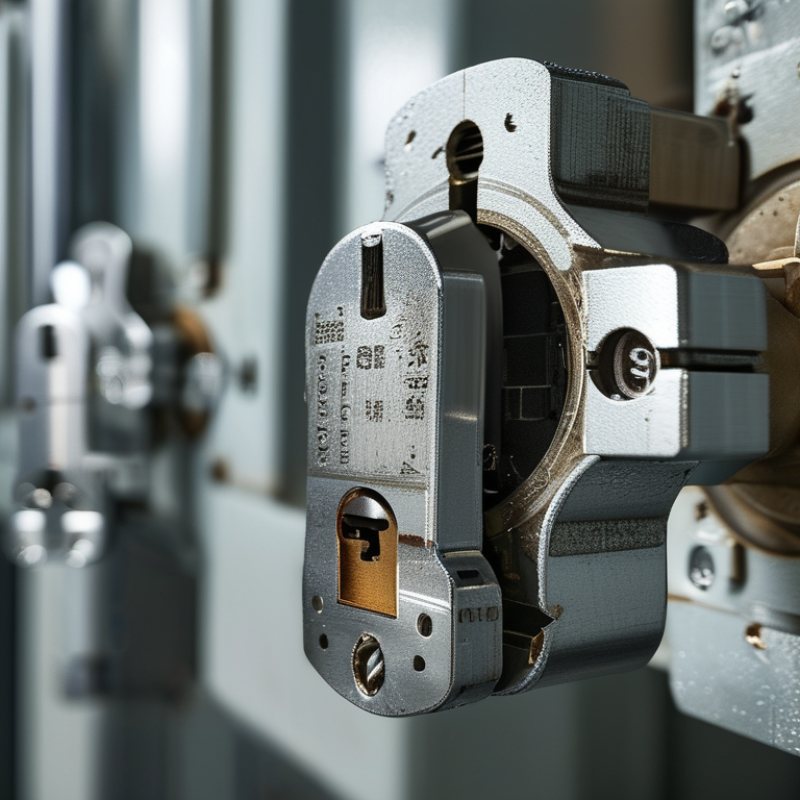
Why Are Latches Components Essential for Global Buyers?

Latch Fundamentals: Six Core Types and Their Global Applications

Why Are Latches Components Essential for Global Buyers?

Latch Fundamentals: Six Core Types and Their Global Applications

Latches are small components, but they control access, alignment, and operational safety. For global buyers, the correct type can reduce maintenance problems across different climates and equipment designs. Six core types cover many industrial needs. Draw latches pull two panels tightly together. Toggle latches provide quick clamping for fixtures and enclosures. Slam latches secure doors when pushed closed. Cam latches turn a key or tool to lock panels. Quarter-turn latches offer fast access during routine servicing. Rotary latches manage multiple locking points on larger doors.

Each design fits a different working scene. Draw latches suit inspection covers that need firm compression. Toggle latches work well on jigs, cases, and removable guards. Slam latches support cabinets, vehicle compartments, and machine doors. Cam and quarter-turn latches are common on electrical enclosures and control panels. Rotary latches help secure heavy access doors with one release action. Fit matters. A latch exposed to rain, dust, vibration, or cleaning chemicals needs suitable materials and surface protection.

Experienced buyers should check load ratings, cycle testing, mounting tolerances, and replacement access. A sample test often reveals more than a polished specification. Check the latch with real gloves, uneven panels, and cold fingers. Field reality differs. Regional safety requirements and enclosure standards also deserve review before volume purchasing. A neat specification can still fail when door gaps change during installation. That weakness is easy to overlook, especially when price dominates the discussion. Clear drawings, traceable test records, and consistent inspection support more reliable international sourcing.

Material Selection: Stainless Steel 304 Versus 316 Corrosion Data

Latches are small components, yet they control access, alignment, and daily operating safety. Global buyers often specify stainless steel because shipping, storage, and installation can expose hardware to moisture. Material selection deserves more attention than appearance alone.

Stainless steel 304 usually contains about 18% chromium and 8% nickel. It performs well in indoor areas, dry equipment, and many mild outdoor applications. However, chloride can attack its passive surface. Pitting may appear around scratches, welds, and crevices. Stainless steel 316 adds roughly 2–3% molybdenum. This improves resistance to chloride-induced pitting, especially near seawater, salt spray, and de-icing chemicals. It is not corrosion-proof.

Real service conditions matter. A latch installed beside a coastal loading door faces more risk than one inside a clean warehouse. Salt deposits can collect under the strike plate. Poor drainage makes the problem worse. Testing under ASTM B117 conditions can compare materials, but salt-spray hours do not predict every field result. That limitation is easy to overlook.

Experienced buyers should review corrosion data, surface finish, fastener compatibility, and maintenance access together. A 316 latch may reduce replacement work, but it can cost more upfront. In a mild environment, 304 may be the more practical choice. In a chloride-rich environment, choosing 304 only for its lower price can become an expensive compromise. Check the actual atmosphere, not just the catalog description.

Performance Standards: IEC 60529 IP65 and UL 94 V-0 Ratings

Latches are small, but they often control enclosure reliability in demanding environments. IEC 60529 defines IP65 as dust-tight protection and resistance to water jets. It does not permit immersion. That distinction matters. A latch must maintain compression around the gasket after repeated opening, vibration, and temperature changes. Otherwise, an IP65 enclosure may fail at its seam, even when the latch looks robust.

UL 94 V-0 addresses plastic flammability, not weather sealing. Under the vertical-burn test, suitable materials extinguish quickly and limit flaming drips. Buyers should verify the exact resin, thickness, and certified assembly. A V-0 rating for one component may not cover the complete latch system. It is an easy detail to overlook.

Industry data supports this caution. A 2024 industrial automation market report projects continued global investment in connected equipment and protective enclosures. More installations mean more cross-border purchasing and more demanding documentation. IEC and UL test records provide stronger evidence than supplier claims alone. Buyers should request test conditions, operating temperature, cycle-life results, and material certificates. Field experience suggests that corrosion and loose fasteners often appear before catastrophic failure. Testing them is less glamorous, but more useful. Ratings are not magic. They describe tested performance under defined conditions, not every installation.

Why Are Latches Components Essential for Global Buyers? — Performance Standards: IEC 60529 IP65 and UL 94 V-0 Ratings
Performance Dimension Applicable Standard or Rating What the Rating Means Why It Matters for Global Buyers Recommended Verification
Ingress protection against solid particles IEC 60529 — IP6X “6” is the highest dust-protection level in the IP Code. The enclosure is dust-tight under the standard test conditions. Helps protect latch mechanisms and enclosed equipment from dust-related contamination in industrial, outdoor, and transportation environments. Test report identifying the enclosure configuration, test method, and IP6X result.
Protection against water jets IEC 60529 — IPX5 “5” indicates protection against water projected by a nozzle from any direction, subject to the specified test conditions. Supports use where equipment may be exposed to rain, washdown, splashing, or directed low-pressure water jets. Independent or qualified laboratory report for the complete assembled enclosure and latch interface.
Combined enclosure rating IEC 60529 — IP65 IP65 combines a dust-tight enclosure rating with protection against water jets. It does not automatically confirm protection against immersion, high-pressure cleaning, corrosion, or ultraviolet exposure. Provides a clear, internationally recognized baseline for comparing enclosure-sealing performance across suppliers and regions. Verify that the IP65 claim applies to the complete enclosure, including the latch, gasket, mounting points, and cable or access openings.
Flammability performance UL 94 — V-0 For the specified vertical test configuration, each of the five test specimens must have an afterflame time of no more than 10 seconds, the total afterflame time must not exceed 50 seconds, afterglow must not exceed 30 seconds, and flaming drips must not ignite the cotton indicator. Helps buyers evaluate the fire behavior of polymeric latch components used near electrical, control, transportation, or industrial equipment. Request a material or component test record stating the exact material grade, specimen thickness, and UL 94 classification.
Material traceability Supporting quality documentation Performance ratings apply to the tested material, design, thickness, and configuration; changing resin, additives, geometry, or production conditions may affect results. Reduces the risk of receiving components that no longer match the tested fire or environmental performance. Review material identification, batch records, certificates, and change-control procedures.
Seal compression and retention Design-dependent; evaluated with IEC 60529 testing IP performance depends on the complete sealing system, including gasket compression, latch alignment, panel stiffness, and repeated opening and closing. Ensures that the latch maintains enclosure protection during installation, operation, vibration, and routine servicing. Check closure-force data, gasket specifications, dimensional tolerances, and post-cycle IP testing.
Mechanical durability Application-specific qualification IEC 60529 and UL 94 do not by themselves define a universal latch life-cycle requirement. Durability must be established through an application-specific test plan. Supports reliable repeated access and reduces maintenance caused by loose, cracked, distorted, or difficult-to-operate latches. Request cycle testing, load testing, vibration or shock evaluation, and inspection criteria relevant to the application.
Corrosion resistance Separate material or environmental test An IP65 result does not certify corrosion resistance. Corrosion performance depends on the latch material, coating, fasteners, environment, and exposure duration. Important for coastal, chemical-processing, outdoor, and high-humidity installations where corrosion can compromise both operation and sealing. Specify the required material and coating system, then request an applicable corrosion test report or inspection record.
Global specification clarity Standardized rating language IEC 60529 IP codes and UL 94 classifications describe specific test outcomes and should not be treated as general claims for every application condition. Improves supplier comparison, technical communication, purchasing consistency, and regulatory documentation across international projects. Include the exact rating, test scope, product configuration, material grade, and applicable environmental limitations in procurement documents.

Regulatory Screening: RoHS 10-Substance Limits and REACH Compliance

Latches are small, but their material records can determine whether a product enters a market. Buyers should screen metal plating, springs, polymers, and surface coatings before approving production. A latch may look identical across samples, yet its alloy or plastic formulation can differ.

The European Commission’s RoHS guidance limits ten substances in electrical and electronic equipment. Most restricted substances have a 0.1% maximum concentration, while cadmium is limited to 0.01%. These limits cover lead, mercury, hexavalent chromium, PBB, PBDE, and four phthalates. Compliance requires more than a supplier statement. Buyers should request material declarations, batch traceability, and laboratory evidence. XRF screening helps identify metals quickly, but it may not confirm every restricted substance.

REACH adds another layer. ECHA’s Candidate List update in January 2025 contained more than 240 substances of very high concern. A latch supplier should therefore monitor SVHC changes, not rely on an old declaration. Request the article-level substance information, especially for plastic handles, adhesives, and coatings. Keep records by part number and production lot. Small details matter. In practical sourcing reviews, missing coating data often creates avoidable delays. A certificate alone feels reassuring. It is not proof. Screening methods also have limitations, and buyers should reconsider them when materials, suppliers, or regulations change.

Why Are Latches Components Essential for Global Buyers?

Regulatory Screening: RoHS 10-Substance Limits and REACH Compliance

The chart shows the maximum concentration limits under RoHS 3 for restricted substances in homogeneous materials. Lead, mercury, hexavalent chromium, PBB, PBDE, DEHP, BBP, DBP and DIBP are limited to 0.10% by weight, while cadmium is limited to 0.01%. Under REACH Article 33, suppliers must communicate information when a Candidate List substance exceeds 0.10% by weight in an article; this is a communication threshold, not a universal REACH substance limit.

Supplier Validation: ASTM B117 5% Salt-Spray Testing and ISO 9001 Traceability

A latch can look simple, yet its failure may stop an enclosure, cabinet, or access panel from working. For global buyers, supplier validation must examine more than shape, finish, and price. In supplier reviews, I look for test evidence linked to the exact material, coating, and production lot. That connection matters.

ASTM B117 5% salt-spray testing offers a controlled way to examine corrosion resistance. The chamber exposes latch samples to a saline mist, while inspectors record rust, blistering, and coating damage. A clear test duration and acceptance level are essential. However, salt spray does not reproduce every outdoor environment. Humidity, pollution, handling, and installation can change results. Not every result predicts field life.

ISO 9001 traceability adds discipline behind the test report. Records should connect raw materials, process checks, inspection results, and shipment batches. This makes a failed sample easier to investigate. Still, paperwork alone proves little. I have seen certificates with vague lot numbers and missing retest rules. That gap deserves attention. Buyers should request dated reports, sample identification, calibration records, and corrective-action evidence. Ask direct questions. A dependable supplier can explain who tested the latch, when it was tested, and how the result affected release decisions.