Top Tyre Pyrolysis Machine Manufacturers Worldwide
Choosing among the top Tyre Pyrolysis Machine manufacturers worldwide requires more than comparing price tags. It requires technical judgment, operational evidence, and careful attention to environmental performance. A reliable machine can process end-of-life tyres into recovered carbon material, steel, and fuel oil. However, output quality depends on feedstock, reactor design, heating control, and condensation systems.
Professor James G. Speight, a widely cited authority on fuel and pyrolysis technologies, states, “Pyrolysis is the thermal decomposition of organic material in the absence of oxygen.” This principle sounds simple. Industrial execution is not. Manufacturers must manage temperature stability, pressure control, gas recycling, fire prevention, and emissions treatment. Buyers should examine factory experience, test data, maintenance access, automation, and after-sales support. They should also request references from operating plants, not only showroom demonstrations.
This guide compares leading manufacturers through practical criteria. These include production capacity, reactor configuration, energy efficiency, material recovery, safety systems, and documented compliance practices. Small details matter. Inspectors may need clear walkways, accessible gauges, insulated pipes, and clean control panels. A strong supplier explains limitations honestly. No ranking is perfect. Feedstock differences can change results significantly. Some published figures may also require independent verification. Therefore, this overview aims to support informed decisions rather than promote one universal solution. Responsible buyers should evaluate local conditions, qualified engineering advice, and long-term operating costs before selecting a Tyre Pyrolysis Machine.
Tyre Pyrolysis Machines: Definition, Purpose, and Core Functions
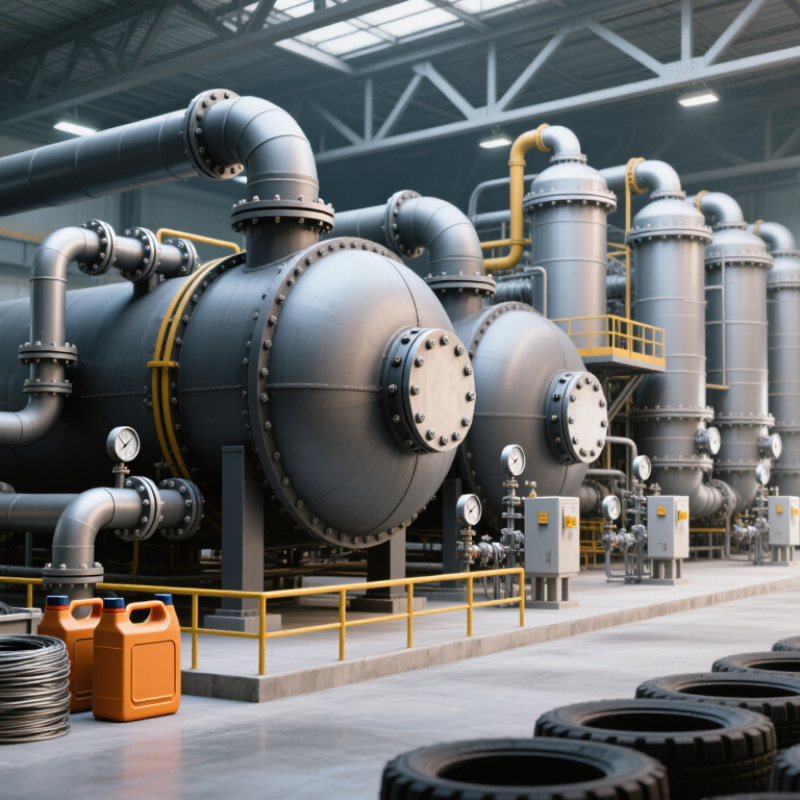
Tyre pyrolysis machines thermally decompose waste tyres in a controlled, oxygen-limited reactor. Unlike open burning, the process separates useful fractions through heating, condensation, and gas handling. Reactor temperatures commonly range from 400°C to 550°C, depending on feedstock and design. Outputs usually include pyrolysis oil, recovered carbon-rich char, steel, and non-condensable gas.
The purpose is resource recovery. The WBCSD Tire Industry Project has reported about 1.5 billion end-of-life tyres generated globally each year. In Europe, ETRMA reports roughly 3.5 million tonnes of end-of-life tyres annually. These figures explain the demand for reliable processing equipment, but capacity alone solves little. Poor feeding systems can cause bridging, while weak condensers reduce oil recovery and increase maintenance.
Core functions include tyre shredding, metered feeding, reactor heating, vapour condensation, gas recycling, char discharge, and emission monitoring.
The U.S. EPA has reported approximately 290 million scrap tyres generated annually in the United States.
A well-designed machine should therefore manage variable tyre sizes, moisture, pressure, and residence time. Performance claims still require caution. Product quality can change with temperature and tyre composition.
“Recycling” is not automatically circular. Real expertise means testing outputs, documenting emissions, and checking whether recovered materials meet their intended specifications.
How Tyre Pyrolysis Technology Works
How Tyre Pyrolysis Technology Works
The World Business Council for Sustainable Development estimates that about 1.5 billion tyres reach end-of-life annually. Tyre pyrolysis converts this difficult waste into usable material. Operators first remove stones, textile fibres, and most steel. The rubber is then shredded and fed into a sealed reactor. Oxygen is largely excluded. Heat, commonly between 400°C and 700°C, breaks long polymer chains into smaller hydrocarbons.
A detail often missed. The reactor does not simply “melt” tyres. It thermally decomposes them. Vapours rise into a condenser, where they become pyrolysis oil. Non-condensable gas can support reactor heating after cleaning. Solid residue becomes recovered carbon-rich char, while separated steel is collected for recycling. Reviews published in Renewable and Sustainable Energy Reviews commonly report approximate yields of 35–45% oil, 30–40% char, 10–15% gas, and 10–15% steel by mass.
Actual results vary. Tyre composition, particle size, heating rate, and residence time all influence output quality. The International Energy Agency stresses that waste-derived fuels require careful testing and emissions control. Therefore, laboratory yield charts should not be treated as guaranteed plant performance. They are useful benchmarks, not promises. Experienced operators monitor reactor pressure, vapour temperature, and feed consistency continuously. Small process changes can alter oil viscosity and carbon residue significantly. That uncertainty deserves more attention in equipment comparisons.
Top Tyre Pyrolysis Machine Manufacturers Worldwide - How Tyre Pyrolysis Technology Works
Tyre pyrolysis thermally decomposes waste tyres in an oxygen-limited reactor, typically producing pyrolysis oil, recovered carbon black, non-condensable gas, and recovered steel. The chart shows a representative mass distribution commonly reported for passenger and truck tyre pyrolysis. Actual yields vary according to tyre composition, reactor temperature, heating rate, and condensation system.
Key Criteria for Comparing Global Machine Manufacturers
Top Tyre Pyrolysis Machine Manufacturers Worldwide
Comparing global machine manufacturers requires more than checking reactor capacity. A credible supplier should show tested throughput, energy consumption, uptime, and product quality. According to the U.S. Tire Manufacturers Association’s 2023 Scrap Tire Management Report, 71% of U.S. scrap tyres entered beneficial-use markets in 2021. This figure signals strong competition for suitable feedstock and recovered products.
Ask manufacturers to provide independent test reports for tyre-derived oil, recovered carbon black, and process gas. Oil specifications should include water content, sulfur, density, and distillation range. Carbon black data should cover ash, moisture, and particle properties. ISO 9001 procedures can support consistency, but certification alone proves little. Visit an operating plant when possible. Look for sealed feeding systems, visible maintenance records, stable temperature controls, and clear emergency procedures. A polished showroom is not enough.
Tips: Compare delivered cost, not the machine price alone. Include shipping, installation, fuel use, labor, spare parts, and downtime. Request twelve months of operating data from comparable feedstock. Ask how often seals, heating elements, and condensers require replacement. I would also test a small batch before signing. It may reveal unexpected moisture, wire content, or oil instability. A supplier claiming zero residue deserves careful questions. Real plants usually have imperfect days. Reliable manufacturers explain those failures and show how they corrected them.
Leading Tyre Pyrolysis Machine Manufacturers Worldwide
Leading tyre pyrolysis machine manufacturers worldwide are judged by more than attractive capacity figures. Their credibility often appears in commissioning records, engineering documentation, and transparent performance data. Experienced manufacturers explain how their systems handle different tyre sizes, moisture levels, and steel content. Details matter.
A reliable supplier should provide controlled heating, gas cleaning, oil condensation, and safe material separation. Operators need clear temperature readings, pressure controls, emergency shutdowns, and accessible maintenance points.
Well-designed machines also reduce unnecessary heat loss and support consistent product quality. Performance varies. Laboratory testing should verify recovered oil, carbon-rich residue, steel output, and emissions before commercial decisions are made.
Professional manufacturers usually share installation requirements, service schedules, training plans, and realistic production estimates. They should identify local permits and environmental obligations without promising shortcuts. Independent references can reveal response times, spare-parts availability, and actual operating stability.
A factory visit may expose practical weaknesses, such as difficult access around filters or poor insulation near service areas. These issues are easy to overlook in brochures.
No system fits every site. Feedstock supply, electricity costs, land conditions, and workforce skills influence the final result. Buyers should compare lifecycle costs instead of focusing only on purchase price. A technically impressive machine can still underperform when maintenance routines are unclear. Careful manufacturers acknowledge these limitations and revise their proposals after reviewing site data. This openness is often a stronger sign of expertise than confident sales language.
Safety, Environmental, and Operational Considerations
Top Tyre Pyrolysis Machine Manufacturers Worldwide
Safety, environmental, and operational evidence should guide the search for top tyre pyrolysis machine manufacturers. The WBCSD Tire Industry Project estimates that about 1.5 billion end-of-life tyres arise globally each year. This volume creates opportunity, but also exposes weak engineering. A credible supplier should provide tested safeguards, traceable performance data, and clear maintenance procedures.
Safety begins with controlled feeding, oxygen monitoring, pressure relief, and reliable emergency shutdowns. Gas detection should cover hydrogen, carbon monoxide, and volatile hydrocarbons. NFPA 652 guidance highlights the importance of dust hazard analysis and combustible dust controls. In practical operation, small leaks around seals can become serious problems. Operators need visible gauges, protected cable routes, and safe access around hot reactors.
Environmental claims require measured evidence. ETRMA’s recent European data reports roughly 3.9 million tonnes of end-of-life tyres annually. Manufacturers should explain how their systems control sulfur compounds, particulate emissions, wastewater, and contaminated condensate. A flare, thermal oxidizer, or gas-cleaning system may be necessary, depending on the process design. The International Organization for Standardization also stresses consistent sampling and reliable measurement in environmental monitoring. Feedstock moisture, steel content, and tyre composition can change output significantly. Performance may look excellent in a demonstration, yet decline during continuous production. That uncomfortable gap deserves more attention. Buyers should request long-duration trials, independent laboratory results, energy balances, and realistic char and oil specifications. A polished brochure is not operational proof.