Aller au contenu principal

Top 10 PSC Steering Column Manufacturers for Global Buyers?

Choosing the right psc steering column manufacturer can influence vehicle safety, steering feel, production stability, and long-term maintenance costs. Global buyers need more than attractive catalogs or impressive factory photographs. They need evidence from engineering teams, production floors, quality records, and real customer support.

This guide examines ten manufacturers serving international buyers, with attention to design capability, material control, machining accuracy, assembly testing, and supply consistency. It also considers OEM development experience, aftermarket responsiveness, export packaging, documentation, and communication across time zones. A reliable supplier should explain tolerances clearly, identify critical components, and provide traceable inspection data. Small details matter. A clean connector. A precise spline. Stable weld quality.

The ranking is not absolute. Different vehicles require different column structures, mounting points, adjustment systems, and performance targets. A manufacturer strong in high-volume passenger cars may not suit specialty vehicles or low-volume projects. Buyers should verify claims through samples, technical drawings, audits, and independent testing where appropriate. Brochures can look convincing. They are not proof.

This overview combines practical sourcing considerations with publicly available company information and industry judgment. Some conclusions may change as factories expand, regulations evolve, or supplier relationships develop. That uncertainty deserves attention. The best decision usually comes from comparing verified capabilities against a clearly defined application, budget, and delivery schedule. A lower quoted price may hide tooling changes, inspection gaps, or expensive field support later. Careful questions protect the project. Only evidence should close the deal.
Top 10 PSC Steering Column Manufacturers for Global Buyers?

What PSC Steering Columns Are and Why They Matter

PSC steering columns are steering-column assemblies designed to transmit driver input through the steering system. In many automotive specifications, PSC means power steering column, but the abbreviation is not universal. Buyers should confirm the supplier’s technical definition before comparing products.

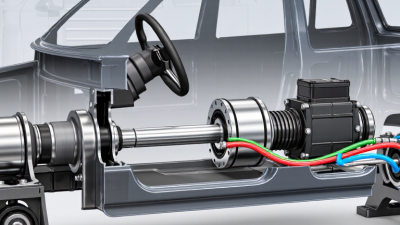
A typical assembly includes a steering shaft, bearings, mounting brackets, collapsible sections, and electrical connections. Some versions also support tilt and telescopic adjustment. These parts must work smoothly inside a narrow space beneath the dashboard.

A slight misalignment can cause vibration, unusual noise, or uneven steering feedback. That affects comfort, but it can also affect control.

PSC steering columns matter because they connect human input with vehicle response. Their collapse mechanism can help manage energy during a severe impact. Material strength, weld quality, corrosion protection, and dimensional accuracy therefore require careful verification.

Buyers should request drawings, load-test results, fatigue data, traceability records, and compatibility details. Sample inspection should include shaft runout, mounting-hole position, connector fit, and adjustment force. Do not trust appearance alone. A clean surface can hide poor internal tolerances.

Terminology can also create confusion across markets. This is where many purchasing decisions become weaker than expected. A careful review of vehicle platform, steering gear, electrical architecture, and applicable safety requirements prevents costly mismatches. Suppliers should explain testing methods clearly, not simply provide attractive claims. Even experienced buyers can overlook small connector changes between model years. That mistake deserves attention.

How the Top 10 Manufacturers Were Selected

Selecting the top 10 PSC steering column manufacturers requires more than checking production volume. Our method combines engineering capability, safety evidence, quality systems, and delivery performance. The OICA 2023 production report recorded about 93.5 million vehicles worldwide. That scale demands stable capacity, regional support, and strict process control. We therefore reviewed manufacturing locations, annual output disclosures, customer coverage, and supply continuity.

Technical validation carried greater weight. Candidates were assessed against UNECE Regulation No. 79, relevant steering-system requirements, and ISO 26262 principles for functional safety. We examined fatigue testing, crash-load analysis, torque measurement, corrosion resistance, and traceability records. IATF 16949 certification was treated as useful evidence, not automatic proof. Independent audits, recall transparency, and documented corrective actions also influenced the ranking. Public data can be incomplete. That weakness needs attention.

Tips: Ask for test reports, not brochures. Check whether certificates cover the actual plant. Request sample traceability from raw material to final inspection. Compare lead times under normal and stressed conditions. A supplier with strong prototypes may still struggle with millions of units. Buyers should also verify software and sensor integration, especially for adjustable or electronically assisted columns. Site visits remain valuable, although they cannot replace independent technical audits.

Profiles of the Top 10 PSC Steering Column Manufacturers

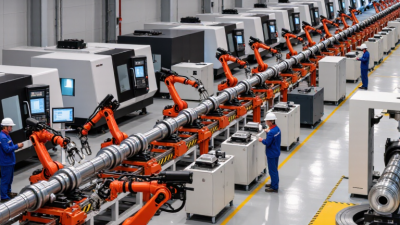
Profile 1 is an integrated PSC steering column manufacturer with stamping, machining, assembly, and testing under one roof. This setup can improve traceability and reduce handoff errors.

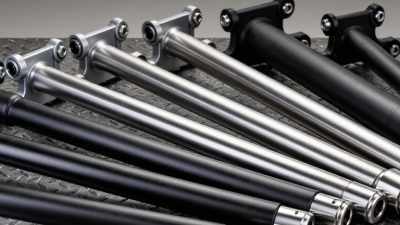
Profile 2 specializes in precision shafts and collapsible mechanisms. Its engineers usually focus on tight tolerances, vibration control, and consistent weld quality.

Profile 3 develops columns for electric vehicles, where low weight and electronic compatibility matter. Its testing should cover sensor accuracy, wiring protection, and thermal cycling.

Profile 4 serves commercial vehicles and designs stronger columns for long duty cycles. Profile 5 offers modular designs that help global buyers adjust mounting points and steering interfaces.

Profile 6 handles lower-volume projects with flexible tooling and close engineering support. That flexibility is useful, but capacity must be checked carefully.

Profile 7 stands out through structured safety validation, including crash simulation and physical impact tests. Buyers should request test methods, revision records, and traceable samples.

Profile 8 competes through efficient production and controlled material costs. Lower prices can help, though incomplete validation may create later expenses.

Profile 9 provides regional assembly and aftermarket support, reducing replacement delays. Profile 10 combines lightweight materials with automated inspection and digital production records.

Strong suppliers should show process approvals, dimensional reports, and corrective-action evidence. No profile is flawless. Catalog claims can hide uneven supplier control. A factory visit, sample inspection, and independent audit remain practical safeguards. Cost, delivery, and engineering response should be compared together.

Comparing Product Quality, Compliance, and Global Supply Capabilities

For global buyers, the top 10 PSC steering column manufacturers should be compared beyond price and catalog breadth. Steering feel, torsional strength, backlash, noise, and fatigue performance need measurable evidence. A reliable supplier should provide test curves, sample records, and production traceability, not only polished brochures. Small details matter, such as weld consistency and connector protection after salt-spray testing.

Safety compliance must remain central. The World Health Organization reported about 1.19 million annual road deaths in its Global Status Report on Road Safety 2023. This makes steering-system validation more than a purchasing formality. Buyers should check alignment with UNECE Regulation No. 79, applicable FMVSS requirements, and ISO 26262 processes for electronically assisted functions. IATF 16949 certification is useful, but certification alone proves little without recent audit findings and corrective-action records.

Global supply capability requires practical proof. Ask about dual sourcing, regional warehouses, export documentation, and recovery plans for semiconductor or metal shortages. PPAP readiness, stable lot sizes, and predictable lead times often matter more than impressive annual capacity claims. Supplier scorecards should track defect rates, warranty feedback, on-time delivery, and engineering response time. No scorecard is perfect. I would still require an independent sample audit before nomination, because a strong prototype can hide weak production discipline.

This anonymous benchmark compares supplier profiles against three buyer-relevant dimensions: product quality systems, automotive compliance readiness, and global supply capability. Scores are normalized to a 100-point procurement framework and should be validated through current certificates, PPAP records, audit results, production samples, and logistics documentation.

Key Buying Factors for International Procurement Teams

International procurement teams should evaluate PSC steering column manufacturers beyond unit price. Begin with application fit: passenger vehicles, commercial platforms, or specialized equipment require different load, tilt, collapse, and interface specifications. Request dimensional drawings, material grades, test methods, and sample records before approving production. Small gaps matter. A few millimeters can affect assembly alignment, driver comfort, or safety performance.

Compliance evidence must be current and traceable. Review quality certifications, process controls, supplier audits, and inspection plans for each production stage. Ask how torque, vibration, fatigue, corrosion, and noise are tested. Reliable manufacturers should explain failure handling without vague promises. Check monthly capacity, tooling ownership, lead times, packaging protection, and spare-part support. Total cost includes engineering changes, freight, customs delays, and rejected batches. A low quotation can become expensive quickly. It happens more often than buyers admit.

Communication also deserves a practical test. Send one technical question and measure the response quality, not only speed. Can the supplier identify risks, confirm assumptions, and document changes? Compare prototype performance with mass-production capability, because a successful sample proves little by itself. Independent inspection may add cost, but it can reveal inconsistent welds, surface damage, or incomplete records. No evaluation is perfect. Procurement teams should leave room for uncertainty and review their scoring model after real delivery data appears.

Top 10 PSC Steering Column Manufacturers for Global Buyers? - Key Buying Factors for International Procurement Teams

Anonymized procurement comparison based on product scope, compliance capability, customization, quality systems and international supply readiness

Rank Anonymized Manufacturer Primary Supply Region PSC Product Scope Steering Column Types Quality Certifications Safety & Compliance Coverage Customization Capability Typical Buyer Segment International Procurement Indicators Procurement Priority Score
1 Manufacturer Profile 01 Western Europe Complete passenger-vehicle steering column assemblies Manual, collapsible, tilt and telescopic columns IATF 16949; ISO 9001; ISO 14001 FMVSS 204, UN R12 and equivalent OEM validation requirements High; vehicle-specific interfaces and crash-load tuning Global passenger-car and commercial-vehicle programs Strong APQP, PPAP, traceability and multi-region logistics 9.5 / 10
2 Manufacturer Profile 02 East Asia Integrated steering columns and intermediate-shaft modules Collapsible, energy-absorbing and height-adjustable columns IATF 16949; ISO 9001; ISO 45001 UN R12, FMVSS 204 and customer-specific crash testing High; supports local and export vehicle platforms Passenger vehicles, SUVs and light commercial vehicles Competitive tooling, export packaging and volume scalability 9.2 / 10
3 Manufacturer Profile 03 North America Heavy-duty and light-commercial steering column assemblies Fixed, tilt, telescopic and high-load collapsible columns IATF 16949; ISO 9001; ISO 14001 FMVSS 204, commercial-vehicle durability and fatigue testing Medium to high; optimized for high-load applications Trucks, buses, vans and specialty vehicles Regional manufacturing, strong after-sales engineering support 9.0 / 10
4 Manufacturer Profile 04 Central Europe Steering columns for passenger vehicles and electric platforms Manual and electrically adjustable collapsible columns IATF 16949; ISO 9001; ISO 14001 UN R12, FMVSS 204 and electric-vehicle platform validation High; advanced packaging and electronic interface integration Premium passenger vehicles and new-energy vehicles Strong engineering documentation and European compliance experience 8.8 / 10
5 Manufacturer Profile 05 South Asia Cost-focused manual steering column assemblies Fixed, tilt and basic collapsible columns IATF 16949; ISO 9001 Applicable regional regulations, UN R12 and customer test plans Medium; best suited to established designs High-volume compact cars and utility vehicles Competitive unit cost, flexible batch sizes and export readiness 8.5 / 10
6 Manufacturer Profile 06 Southeast Asia Steering columns and shaft assemblies for regional platforms Manual collapsible and tilt-adjustable columns IATF 16949; ISO 9001; ISO 14001 UN R12, regional vehicle regulations and durability testing Medium to high; suitable for localized vehicle programs Passenger cars, pickups and compact commercial vehicles ASEAN logistics access, moderate lead times and supplier localization 8.3 / 10
7 Manufacturer Profile 07 Eastern Europe Stamped and welded steering column structures Fixed, tilt and collapsible assemblies IATF 16949; ISO 9001 UN R12, OEM structural validation and fatigue testing Medium; strong metal-forming and welding capability Tier suppliers, aftermarket programs and regional OEMs Nearshore European delivery, competitive labor cost and tooling support 8.1 / 10
8 Manufacturer Profile 08 Latin America Regional replacement and vehicle-program steering columns Fixed, tilt and basic telescopic columns ISO 9001; selected programs aligned with IATF 16949 Regional regulations, UN R12 where applicable and customer validation Medium; focused on established regional specifications Aftermarket, buses, pickups and regional vehicle assembly Short regional transit routes and local service availability 7.8 / 10
9 Manufacturer Profile 09 Middle East and North Africa Commercial-vehicle and replacement steering column assemblies Fixed, tilt and heavy-duty telescopic columns ISO 9001; selected facilities with IATF 16949 UN R12 and customer-specific durability and load testing Medium; emphasis on robust and serviceable designs Trucks, buses, fleet vehicles and aftermarket distributors Regional distribution access and suitability for harsh operating conditions 7.6 / 10
10 Manufacturer Profile 10 Global contract-manufacturing network Low-to-medium volume prototype and production columns Manual, collapsible and application-specific designs ISO 9001; certification scope varies by production site Customer engineering validation, UN R12 or FMVSS 204 when contractually required Very high; suitable for prototypes and niche platforms Start-ups, specialty vehicles, retrofit and low-volume programs Flexible engineering, lower minimum order quantities and staged tooling 7.4 / 10
Recommended evaluation factors: certification validity, crash and fatigue test evidence, PPAP maturity, engineering change control, traceability, tooling ownership, annual capacity, minimum order quantity, lead time, export documentation, warranty terms and total landed cost.