China Top 10 Sodium Pyrosulfite Manufacturers for Global Buyers
Choosing a reliable Sodium Pyrosulfite manufacturer requires more than comparing prices or factory photographs. Global buyers need consistent purity, secure packaging, responsive documentation, and dependable export experience. This guide examines ten leading manufacturers through practical purchasing criteria, including production capacity, quality-control systems, certifications, delivery performance, and customer support.
Dr. Helen S. Chen, an independent inorganic-chemicals consultant, says, “A trustworthy supplier proves consistency through records, not promises.” Her observation is especially relevant for Sodium Pyrosulfite, which can react with moisture and requires careful storage, handling, and transport. Buyers should inspect technical data sheets, certificates of analysis, packaging specifications, and batch-traceability procedures before placing large orders. Small details matter. A damaged liner can affect an entire shipment.
The companies featured here serve different market needs. Some focus on high-volume industrial supply, while others provide flexible packaging and customized support. Their strengths are not identical. A larger producer may offer stronger capacity, but a regional supplier could respond faster to urgent requests. This comparison is useful, but it is not permanent. Prices, certifications, production schedules, and export policies can change without notice. Buyers should verify current information directly with each manufacturer.
The goal is practical guidance, not an unquestionable ranking. Careful verification remains essential.
Sodium Pyrosulfite Fundamentals: Na₂S₂O₅, CAS 7681-57-4, and E223
Sodium pyrosulfite, commonly called sodium metabisulfite, has the formula Na₂S₂O₅ and CAS 7681-57-4. It is listed as E223 in food additive systems. The white crystalline powder releases sulfur dioxide when exposed to moisture or acids. This reaction supports antioxidant and preservative functions in controlled applications.
JECFA’s specifications identify sulfites by sulfur dioxide content and establish a group acceptable daily intake of 0–0.7 mg/kg body weight, expressed as SO₂. EFSA’s 2016 re-evaluation reported insufficient data for a full ADI and highlighted possible exposure concerns among high consumers. These findings matter for global buyers. A food-grade certificate alone is not enough. Request assay, SO₂ content, moisture, iron, heavy metals, and thiosulfate results.
Good material should dissolve consistently, remain free-flowing, and arrive in moisture-resistant packaging. Storage rooms need low humidity and separation from acids. Small handling mistakes can increase SO₂ release. They can also change test results. Buyers comparing manufacturers should check batch history, traceability, HACCP or equivalent systems, and current safety data sheets. Codex GSFA and local food regulations should be reviewed for the intended product category. Compliance is not automatic. Product names sometimes create confusion, especially when “pyrosulfite” and “metabisulfite” are treated as different substances. That assumption deserves a second check.
China’s Top 10 Manufacturers Ranked by Purity, Capacity, and Export Data
China’s top ten sodium pyrosulfite manufacturers should be judged through measurable evidence, not advertising claims. Purity remains the key starting point. Leading facilities typically provide batch test reports, controlled moisture levels, and traceable raw material records. Independent laboratory checks can confirm assay results before shipment. This step matters because small purity differences may affect processing stability and storage performance.
Production capacity separates regular suppliers from occasional exporters. The strongest manufacturers operate dedicated lines, enclosed packing areas, and documented quality systems. Their output can support container-scale orders without changing product consistency. Export data adds another practical measure. Repeated shipments, stable customs records, and experience with international packaging show whether a factory can manage real trade conditions. Port access also matters. Faster loading reduces avoidable delays.
The ranking should place manufacturers with strong purity results, dependable capacity, and transparent export records near the top. However, no list is perfect. Public shipment data may be incomplete, while factory capacity can change during maintenance or market fluctuations. Buyers should request recent certificates, production photos, packaging specifications, and sample testing. A careful audit is still necessary. The most reliable choice is not always the largest producer. It is the manufacturer that documents each batch, answers technical questions clearly, and maintains consistent delivery across multiple orders.
Technical Standards: ≥97% Assay, SO₂ Content, and Heavy-Metal Limits
For global buyers, a 97% assay should be the entry point, not the final decision. Sodium pyrosulfite is commonly traded as sodium metabisulfite, Na₂S₂O₅. Its theoretical sulfur dioxide yield is about 67.4% by mass. A reliable certificate should therefore show assay, available SO₂, moisture, and test methods separately. The JECFA Compendium of Food Additive Specifications lists a lower assay benchmark of 95%, so a ≥97% purchasing requirement provides a useful quality margin. It does not replace laboratory verification.
SO₂ content can decline during storage, especially in warm, humid warehouses. Ask manufacturers for production-date results and retest samples after transit. Heavy-metal controls deserve equal attention. EU Regulation (EU) No 231/2012 sets lead at no more than 2 mg/kg for the relevant additive specification, while arsenic, mercury, and other elements may follow separate limits. Requirements vary by food, water-treatment, and industrial applications. ICP-MS or ICP-OES testing offers stronger evidence than a generic “heavy metals pass” statement. Some certificates remain too vague. Buyers should request detection limits, sampling dates, and accredited laboratory details. Supplier comparisons should also examine packaging integrity, because a damaged liner can reduce SO₂ strength before arrival.
Industry Applications Across Food, Mining, Water Treatment, and Textiles
China Top 10 Sodium Pyrosulfite Manufacturers for Global Buyers
Sodium pyrosulfite supports several industries through its reducing and preservative properties. In food processing, it helps limit oxidation and protects color in selected products. Buyers must verify permitted use levels, residual sulfite limits, and food-grade documentation for each market. Small differences matter.
Mining operations use this chemical as a reagent in flotation circuits. It can help control oxidation and improve mineral separation under carefully managed conditions. Water treatment facilities apply it to remove residual chlorine before discharge or membrane processes. Textile plants also use it as a reducing agent during bleaching, dyeing, and wastewater control. Performance depends on dosage, water chemistry, temperature, and contact time. Field results can vary.
Tips: Compare assay, iron content, moisture, particle size, and packaging before selecting a manufacturer. Request a recent certificate of analysis, safety data sheet, batch traceability, and transport test records. Confirm whether bags resist humidity during long sea shipments. Store the product in a cool, dry, ventilated area. It can release sulfur dioxide when exposed to acids or moisture. Do not judge suppliers by price alone. A cheaper offer may reflect weaker quality control. Even experienced buyers can overlook seasonal variation between batches. Run a small application test first.
Global Buyer Checklist: Certifications, Packaging, MOQ, and Shipping Terms
For global buyers comparing China’s top sodium pyrosulfite manufacturers, verification should begin with documents, not quotations. Ask for a current COA, SDS, specification sheet, and batch traceability record. Check whether ISO 9001 supports consistent production control. Confirm destination-market requirements before ordering. Certificates can be genuine yet unsuitable for your application. Request recent test dates, issuing laboratories, and matching batch numbers. Small details matter.
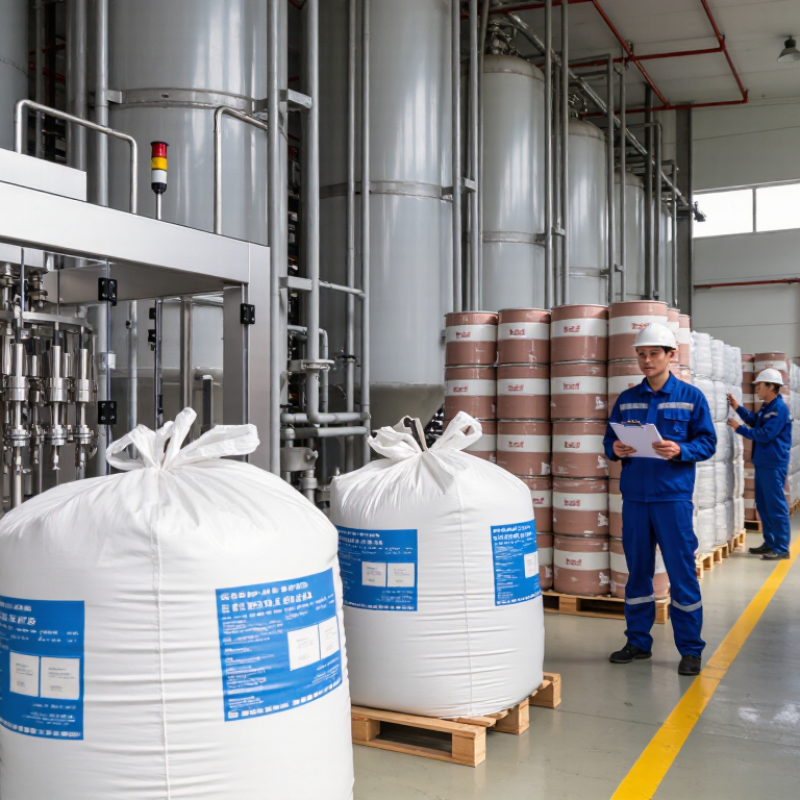
Packaging must protect the chemical from humidity during storage and transit. Confirm net weight, inner liner material, bag construction, pallet treatment, and container loading photographs. A practical trial may use 25 kg moisture-resistant bags before larger shipments. Ask how damaged bags are replaced. Do not accept vague answers. Humidity exposure can change handling quality and create avoidable losses. Packaging choices should match warehouse conditions, not just the supplier’s standard offer. Stay practical.
MOQ affects cash flow, production planning, and shipping efficiency. Request separate prices for samples, one pallet, and a full container. Compare EXW, FOB, CFR, and CIF terms carefully. Confirm who pays export clearance, ocean freight, insurance, destination charges, and demurrage. Obtain estimated lead time in writing, including production and port handling. A pre-shipment inspection can verify marks, quantity, and documents. The process is not flawless. I would still keep a small contingency for port delays, document corrections, or unexpected repacking.