Top 10 Worldwide Door Latch Types for Global Buyers?
Choosing a door latch for international markets requires more than comparing price, finish, and packaging. A latch must match door thickness, traffic levels, climate, fire requirements, and local installation habits. That sounds obvious. It is often missed.
Grand View Research estimates that the global door hardware market reached approximately USD 17.2 billion in 2023. Its 2024–2030 outlook also indicates continued growth, supported by construction, renovation, and electronic access demand. These figures do not isolate latches. However, they show the wider commercial environment surrounding the worldwide door latch market. Buyers increasingly compare mechanical tubular, mortise, cylindrical, rim, deadlocking, magnetic, privacy, panic, and smart latch designs.
Lori Greene, AHC/CDC, a respected architectural hardware consultant, states, “The door is a system, and all of the components need to work together.” That principle guides this overview. A latch can appear robust but still fail as a complete door assembly. Compatibility matters. So do tested cycles, corrosion resistance, backset dimensions, strike alignment, and replacement availability.
This guide examines ten widely used door latch types for global buyers. It considers practical experience, relevant standards, and supply-chain realities. EN 12209, BHMA A156 standards, and manufacturer test documentation deserve careful review. Marketing claims alone are not enough. A small measurement error can create expensive rework, especially across different regions. The ranking is useful, but not absolute. Local conditions may change the best choice. That is the uncomfortable part.
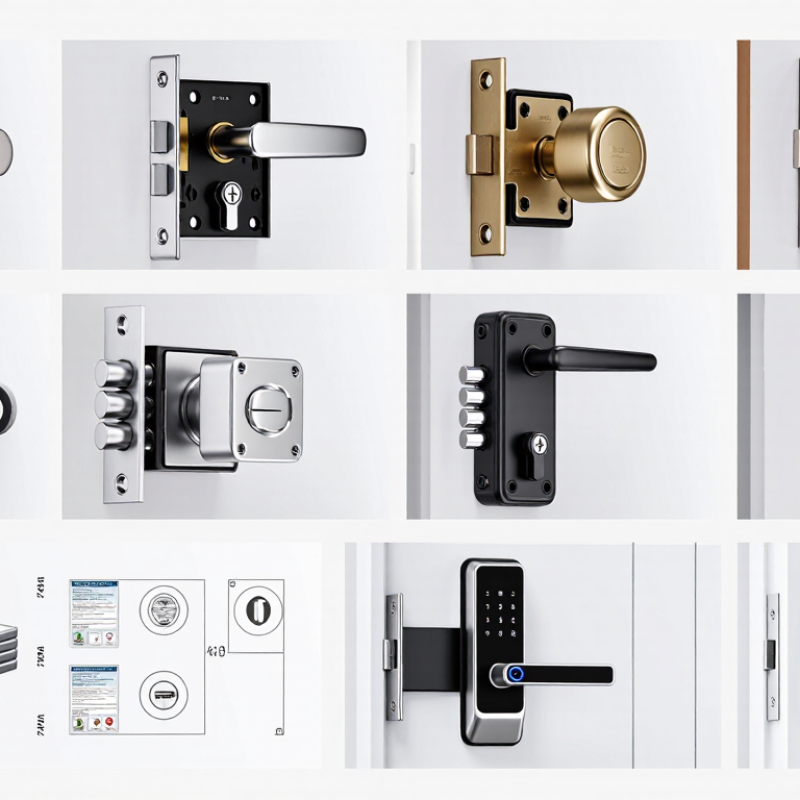
Define the 10 Global Door Latch Types by Function and Construction
Global buyers should classify door latches by function and construction, not by appearance alone. Grand View Research valued the global door hardware market at about USD 17 billion in 2023, showing strong demand across residential, commercial, and institutional projects. The spring latch uses a beveled bolt and suits standard interior doors. A deadlatch adds a security plunger beside the bolt. A mortise latch fits inside a deep door pocket, while a tubular latch uses a compact cylindrical case. A cylindrical latch combines the case and trim for quick installation.
Function changes the specification. A passage latch allows free movement without locking. A privacy latch adds a simple internal lock for bedrooms or washrooms. A deadbolt uses a solid, non-beveled bolt and resists forced retraction. A magnetic latch relies on concealed magnets, reducing visible hardware and operating noise. A roller catch uses a spring-loaded roller, often for lightweight cabinet or interior doors. A panic exit device releases the latch through a horizontal push bar, supporting rapid emergency egress.
MarketsandMarkets reported continued growth in electronic and access-control hardware through 2024, yet mechanical latches remain practical where power, maintenance, or cost limits apply. Material also matters. Stainless steel supports humid environments, zinc alloys reduce cost, and hardened steel improves resistance. Check door thickness, strike alignment, cycle ratings, fire-performance documentation, and regional test requirements. Reports offer useful direction, but their categories can overlap. A “heavy-duty” label alone is not proof of field reliability.
Top 10 Worldwide Door Latch Types for Global Buyers
Define the 10 Global Door Latch Types by Function and Construction
| No. | Door Latch Type | Primary Function | Construction and Operating Principle | Typical Door Applications | Main Advantages | Important Selection Factors |
|---|---|---|---|---|---|---|
| 1 | Tubular Spring Latch | Holds a closed door in the frame while allowing release through a lever, knob, or pull-side mechanism. | A compact tubular case contains a beveled spring-loaded latch bolt. The bolt retracts when the spindle or follower is turned and extends automatically when released. | Residential interior doors, light commercial doors, cabinets, and general-purpose hinged doors. | Simple installation, compact dimensions, low cost, and easy operation. | Backset, faceplate size, latch projection, door thickness, corrosion resistance, and compatibility with the handle set. |
| 2 | Mortise Latch | Provides a concealed, durable latching solution for doors where a recessed lock case is preferred. | A rectangular case is fitted into a pocket routed into the door edge. A spring latch bolt is operated by a spindle, lever handle, or compatible lock furniture. | Residential entrance doors, hospitality doors, office doors, institutional doors, and architectural projects. | Strong construction, clean appearance, flexible furniture compatibility, and good alignment stability. | Mortise pocket dimensions, case depth, center distance, follower size, handedness, faceplate finish, and installation skill. |
| 3 | Cylindrical Bored- Lock Latch | Combines the latch mechanism with a cylindrical lock or passage/privacy lockset installed through bored holes in the door. | A tubular chassis passes through the door. Turning the knob or lever retracts the spring latch through a central spindle and follower assembly. | Homes, apartments, offices, schools, and other doors using cylindrical locksets. | Fast installation, widely available configurations, straightforward replacement, and compatibility with many lever or knob designs. | Door preparation, bore diameter, backset, door thickness, strike dimensions, fire-door requirements, and local code compliance. |
| 4 | Deadlatch | Provides automatic latching with additional resistance against manipulation or forced retraction when the door is closed. | A spring latch is combined with an auxiliary deadlocking plunger. When the door closes, the plunger contacts the frame and prevents the main latch from being pushed back from the outside. | Exterior residential doors, storefront entrances, apartments, and medium-security commercial openings. | Automatic deadlocking action, improved security compared with a basic spring latch, and convenient one-motion closing. | Correct strike alignment, auxiliary-plunger contact, latch projection, door/frame tolerances, and compatibility with exit or access-control hardware. |
| 5 | Roller Latch | Keeps a door closed without requiring a beveled latch bolt to retract through a handle. | A spring-loaded roller, usually made from steel, brass, or engineered polymer, engages a keeper or strike. Pushing or pulling the door overcomes the roller spring force. | Closet doors, interior passage doors, double-action doors, cabinet doors, and doors using fixed pulls. | Quiet operation, easy push-pull use, no handle required for release, and good tolerance for light door movement. | Roller diameter, spring force, keeper geometry, door weight, closing speed, and resistance to vibration or wind loads. |
| 6 | Magnetic Latch | Maintains door closure using magnetic attraction rather than a projecting mechanical latch bolt. | A permanent magnet or magnetized assembly aligns with a steel keeper or armature. The magnetic holding force releases when the door is pulled away or the mechanism is actuated. | Interior doors, glass or frameless doors, cabinetry, light partitions, and selected access-control applications. | Very quiet operation, minimal wear, clean appearance, and low operating force. | Holding force, magnet and keeper alignment, residual magnetism, temperature range, door weight, and whether the application requires fail-safe or fail-secure electrical behavior. |
| 7 | Rim Latch | Latches a door with the mechanism mounted on the surface rather than recessed into the door edge. | A surface-mounted case contains a spring latch or related locking mechanism. The latch engages a surface-mounted keep or strike on the frame. | Traditional entrance doors, narrow-stile doors, heritage renovations, gates, and doors where deep mortising is impractical. | Easy retrofit, limited door preparation, visible service access, and suitability for thin or historic doors. | Case projection, mounting strength, door/frame alignment, visual requirements, security level, and exposure to weather or impact. |
| 8 | Hook Bolt Latch | Secures a sliding or hinged door by engaging a keeper with a hook-shaped bolt that resists direct pull-out. | A rotating or sliding hook extends from the lock case and captures a strike or keeper. Some versions operate through a cylinder, lever, or multipoint mechanism. | Sliding doors, patio doors, narrow-frame entrances, multipoint door systems, and openings requiring enhanced pull resistance. | Strong engagement, effective resistance to separation, and suitability for doors with limited edge space. | Hook geometry, keeper depth, operating clearance, door sag, alignment tolerance, corrosion protection, and compatibility with the complete lock system. |
| 9 | Slide Bolt or Barrel Bolt | Provides simple manual locking or secondary securing for a door, gate, cupboard, or partition. | A manually operated metal rod slides into a surface-mounted or recessed keeper. Common constructions include straight bolts, barrel bolts, flush bolts, and tower bolts. | Utility rooms, gates, cupboards, inactive leaves of double doors, restroom doors, and low-security internal openings. | Simple design, low maintenance, low purchase cost, and easy visual confirmation of the bolt position. | Bolt length and diameter, mounting substrate, corrosion resistance, required security level, access from one or both sides, and provision for padlocks if needed. |
| 10 | Panic or Exit-Device Latch | Allows occupants to unlatch an exit door quickly from the egress side by pushing a horizontal bar or touch-operated device. | A spring-loaded latch mechanism is connected to a push bar or touch pad. Depressing the device retracts the latch from the strike; many systems also include outside access trim or optional fire-rating features. | Commercial exits, public buildings, schools, assembly spaces, industrial facilities, and other regulated egress doors. | Rapid exit operation, intuitive use under emergency conditions, and compatibility with coordinated door hardware. | Local egress and fire-door regulations, door width, single or double-door configuration, dogging requirements, outside access, monitoring, and certified performance ratings. |
Buyer note: Latch terminology and required testing can vary by country and project type. Confirm door preparation, handing, dimensions, corrosion environment, fire and egress requirements, and applicable local standards before ordering.
Related Posts
-

Unlocking Safety: The Essential Guide to Worldwide Door Latch Innovations
-
How to Identify the Part of Door That Latches?
-
10 Tips for Choosing the Right Door Latch Worldwide?
-
The 10 Best Commercial Door Latches You Need to Know?
-
How to Choose the Right Commercial Door Latches for Your Business Needs?
-

How to Find Quality Nova Steering Column Parts Easily?