Aller au contenu principal

Essential Tips for Choosing Motor Housings for Your Needs?

Choosing the right motor housings is crucial for optimal performance and longevity. These components protect motors from environmental damage, ensuring reliable operation. When selecting motor housings, one must consider several factors that influence both functionality and efficiency.

Different applications demand specific material types and sizes. For instance, corrosive environments require robust materials like stainless steel. This choice enhances durability and performance. Additionally, proper ventilation in motor housings helps prevent overheating, a common concern in various industrial settings. However, not all designs offer this feature, which can lead to false expectations.

Finding the right fit can be challenging. It is essential to consult with experts in the field. Their insights help avoid common pitfalls, such as inadequate sealing or insufficient space for installation. Ultimately, taking the time to choose suitable motor housings will pay off in enhanced operational reliability and reduced maintenance needs.
Essential Tips for Choosing Motor Housings for Your Needs?

Understanding the Importance of Motor Housings in Application Selection

Motor housings play a crucial role in application selection. They provide protection and support for the motor inside. Choosing the right housing can impact performance and longevity. Properly selected housings can withstand environmental challenges. This includes temperature variations, moisture, and dust exposure.

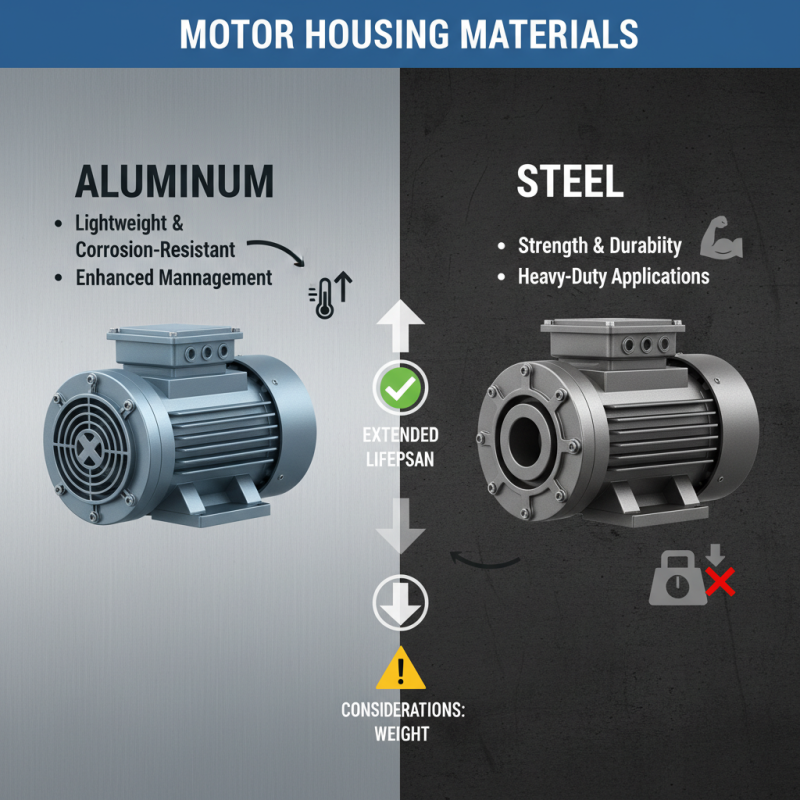
The material of the housing is essential. Various options include aluminum, steel, and plastic. Each material has its own advantages and limitations. Aluminum is lightweight and corrosion-resistant. Steel offers durability but can be heavy. Plastic can be cost-effective but may not provide the same level of protection.

Consideration of housing dimensions is also vital. An ill-fitting housing can lead to vibration issues and accelerated wear. This might require frequent replacements, increasing costs. Assessing each motor's specific needs will help avoid costly mistakes. Selecting a reliable housing involves understanding your application’s demands and limitations. Each choice carries consequences, and reflection on these can guide better decisions.
Key Factors to Consider When Choosing Motor Housings

When selecting motor housings, several key factors come into play. Material choice is crucial. For instance, aluminum is lightweight and resistant to corrosion. However, steel offers superior strength. The environment where the motor will operate matters greatly. Housings used in harsh settings should be durable and able to withstand impacts.

Size and compatibility with existing systems are also important. A well-fitting housing ensures optimal performance and efficiency. According to the Global Electric Motor Market Report, incorrect housing can lead to a 20% reduction in motor efficiency. Cooling features must be evaluated as well. Overheating is a common issue without proper heat dissipation.

In addition, cost-effectiveness is a significant consideration. Opting for the cheapest option may lead to long-term expenses due to maintenance and replacements. Advanced designs may require a larger upfront investment but could result in lower operation costs over time. Reflect on your specific applications. A thorough analysis of these factors leads to better decision-making and improved motor longevity.

Essential Tips for Choosing Motor Housings for Your Needs

Factor Description Considerations
Material The substance used to create the housing. Aluminum for lightweight, steel for strength; consider corrosion resistance.
Size Dimensions of the motor housing. Ensure it fits the motor dimensions and installation space.
Cooling Requirements The ability of the housing to dissipate heat. Consider the thermal management needs based on the motor’s operation.
Ingress Protection (IP) Rating Resistance to dust and water. Select a rating that matches environmental conditions.
Mounting Options How the housing can be installed. Look at base, flange, or bracket options based on your setup.
Vibration Resistance Housing ability to absorb and withstand vibration. Consider applications with high vibration environments.
Cost The price of the motor housing. Balance between quality and budget constraints.

Different Materials for Motor Housings and Their Benefits

Essential Tips for Choosing Motor Housings for Your Needs?

When selecting motor housings, material choice plays a crucial role. Different materials offer unique benefits that cater to specific needs. Aluminum is lightweight and resistant to corrosion. It helps in thermal management and can extend the lifespan of motors. Steel, on the other hand, provides strength and durability. It's ideal for heavy-duty applications. However, its weight can be a drawback for lightweight designs.

Consider the environment where the motor will operate. For wet or humid conditions, materials like stainless steel are preferable. They resist rust and enhance longevity. If cost is a constraint, plastic housings may be appealing. They are lightweight and rustproof, but can lack strength compared to metals.

Tips: Always evaluate the application requirements. Consult with experts who can guide material selections based on performance needs. Don't rush this process; improper choices can lead to failure. Test different materials to understand their strengths and weaknesses in your specific context.

Environmental Considerations for Motor Housing Choices

When selecting motor housings, environmental considerations are crucial. The materials used in motor housing can significantly impact both performance and sustainability. For example, aluminum and stainless steel are commonly chosen for their durability and resistance to corrosion. However, not all stainless steel is created equally. The manufacturing process can vary in carbon footprint. A study by the International Energy Agency indicates that steel production accounts for approximately 7% of global carbon emissions.

Recycling plays a vital role in this sector. According to the European Commission, nearly 90% of end-of-life aluminum can be recycled. This not only reduces waste but also minimizes the need for new raw materials. While metals are often preferred, composites and thermoplastics are being explored for their lighter weight and potential energy savings. Yet, these materials may pose challenges in terms of recycling and disposal.

It's important to evaluate the life cycle of motor housings. Many manufacturers overlook the environmental impact at the end of a product's life. If motor housings are not designed for easy disassembly, recycling becomes more complex. This oversight can lead to increased landfill waste. Making informed choices about both materials and design is essential for sustainability in motor housing production.

Industry Standards and Regulations Affecting Motor Housings

When selecting motor housings, industry standards and regulations play a critical role. Compliance ensures safety and efficiency. Standards often specify materials, dimensions, and performance criteria. These guidelines help in avoiding potential hazards, especially in high-risk environments.

Motor housings must withstand various conditions. For instance, in industrial settings, they protect motors from dust and moisture. This is vital for longevity and optimal performance. Regulations may vary by region and application, making it crucial to stay informed about local requirements.

Understanding these standards can feel overwhelming. The complexity of regulatory guidelines may lead you to question your choices. It's essential to consult with experienced professionals. They can provide insights tailored to your specific needs. Additionally, keeping abreast of updates can ensure ongoing compliance and mitigate risks over time.