Aller au contenu principal

How to Choose the Best Dashboard Camera for Your Needs?

Choosing the best Dashboard Camera can feel overwhelming. However, it plays a crucial role in modern driving safety. According to a recent industry report, the global dashboard camera market is expected to reach over $6 billion by 2026. This growth reflects rising insurance claims, indicating that more drivers recognize the value of evidence in accidents.

When selecting the right Dashboard Camera, consider key features such as resolution, field of view, and night vision capabilities. A high-resolution camera may provide clearer video evidence, which can be invaluable during disputes. Interestingly, while many users prioritize advanced features, many might overlook installation ease or customer service support. This oversight can lead to frustration later.

Also, evaluate user reviews and ratings. Not all products marketed as “best” deliver excellent real-world performance. Reports show that around 30% of users experienced issues within a year. Understanding these insights can help you select a dashboard camera that truly meets your needs, reduces headaches, and enhances your driving peace of mind.
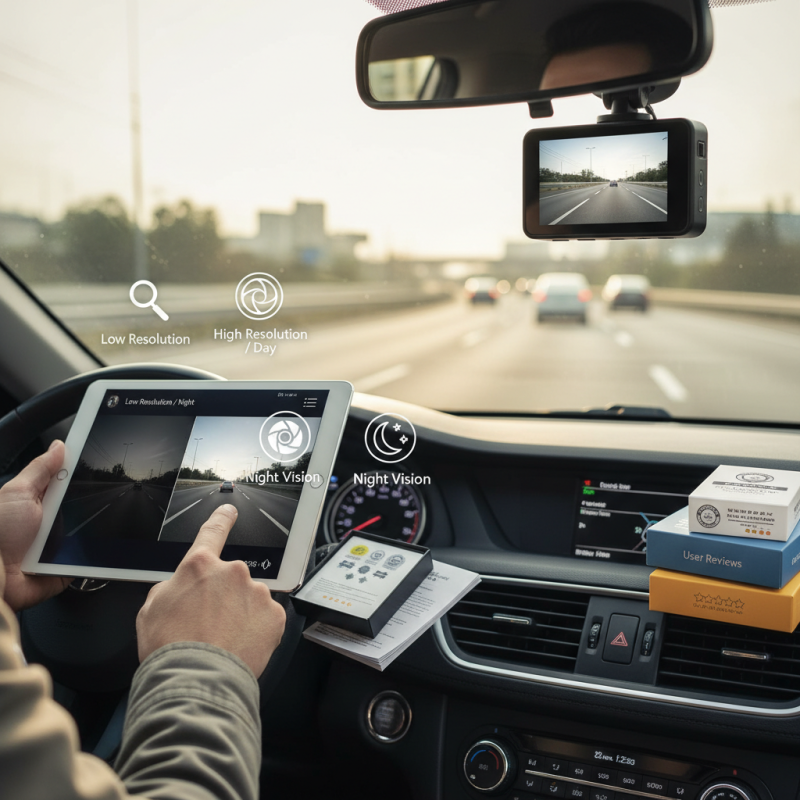
How to Choose the Best Dashboard Camera for Your Needs?

Understanding Your Dashboard Camera Needs: Key Features to Consider

When choosing a dashboard camera, understanding your needs is crucial. Key features can significantly impact your decision. The American Automobile Association (AAA) reports that dashboard cameras can provide valuable evidence in case of an accident. However, not all models offer the same capabilities.

Resolution is a critical factor. Higher resolution cameras capture clearer footage, making it easier to identify details during incidents. A minimum of 1080p is recommended according to industry standards. Additionally, consider the field of view. A wider angle allows for better visibility of the surroundings. Many experts suggest a lens angle of at least 120 degrees for comprehensive coverage.

**Tip**: Assess your driving habits. If you often drive at night, look for models with night vision capabilities.

Another aspect to reflect on is storage capacity. Many dashboard cameras come with limited storage. Opt for models that allow expandable memory. This can save you from missing important footage. Battery life is also crucial; a short-lived battery may fail to capture crucial incidents.

**Tip**: Regularly review and manage your recordings. This helps prevent data loss due to full storage.

By paying attention to these features, you can ensure the dashboard camera meets your specific needs.

Resolution and Image Quality: Comparing 1080p vs 4K Dashcams

When choosing a dashboard camera, the resolution and image quality are critical factors. The most common options are 1080p and 4K. 1080p cameras capture clear images but may lack detail in low-light situations. They are often more affordable and can meet basic recording needs.

In contrast, 4K cameras offer superior image quality. They provide sharper and more detailed footage, especially useful in identifying license plates or faces, which could be crucial after an incident. However, 4K models require more storage space. They can also drain battery life faster than their 1080p counterparts.

Deciding between these resolutions involves assessing your driving habits and needs. If you drive mostly during the day, a 1080p dashcam may suffice. However, for all-around performance and detail, upgrading to 4K can be beneficial. It’s essential to consider the potential drawbacks, like cost and storage management, when making your choice. Reflect on your requirements carefully.

Comparison of Dashcam Resolutions: 1080p vs 4K

This bar chart compares the image quality ratings of 1080p and 4K dashcams. While 1080p offers decent quality, 4K provides significantly enhanced clarity, making it a preferred choice for those seeking high-resolution footage.

Night Vision Capabilities: Importance for Nighttime Driving Safety

When choosing a dashboard camera, night vision capabilities are crucial. Driving at night presents unique challenges. Visibility can decrease significantly, making it hard to see obstacles or other vehicles. A quality dash cam should capture clear footage in low-light settings. This saves you from disputes in case of an accident.


Look for cameras with infrared technology. This feature enhances visibility during nighttime driving. Some cameras also offer wide dynamic range (WDR) capabilities. WDR helps balance bright and dark areas in a scene. Such features ensure more reliable recordings when conditions are less than ideal.


However, not all night vision cameras perform equally. Some may struggle in extreme darkness, leaving gaps in footage. Research and read reviews to understand real user experiences. It's vital to balance price with quality. Ultimately, a well-chosen dash cam can provide peace of mind and protection on the road, even after the sun sets.

Storage Options: Evaluating SD Card Capacity and Loop Recording

When choosing the best dashboard camera, one must consider storage options carefully. SD card capacity plays a crucial role in how much footage you can store. A typical dashcam records in high-definition, which can consume significant storage space. For example, recording in 1080p consumes about 1.5 GB per hour. Therefore, a 32 GB card can hold roughly 20 hours of footage. This is essential for drivers who need to retain evidence in case of accidents.

Loop recording is another vital feature to evaluate. It ensures the camera overwrites the oldest footage when storage fills up. However, this raises concerns about losing critical recordings. For instance, a study indicated that 23% of drivers experienced incidents that required footage, yet nearly half used cameras without sufficient storage. Thus, understanding loop recording and storage capacity is essential for effective use.

While high-capacity cards offer longer recording times, they can be more expensive. Balancing cost and capacity can be tricky. It's vital to assess personal needs and typical driving conditions. Not every driver will need the maximum capacity. Reflecting on your routine might help identify the appropriate storage size.

GPS and Connectivity: The Benefits of Smart Features in Dash Cameras

When choosing a dashboard camera, consider the advantages of GPS and connectivity. These smart features can enhance your driving experience significantly. GPS functionality offers precise location tracking. This can be particularly useful in case of accidents. It provides vital information to insurance companies or authorities. Accurate data can assist in resolving disputes.

Connectivity options like Wi-Fi or Bluetooth enable easy sharing and management of your footage. With a connected camera, users can effortlessly upload videos to their smartphones. This process can streamline evidence gathering. However, some may find the initial setup complex and frustrating. It may take time to learn how to fully utilize these features.

Another aspect to consider is the importance of real-time alerts. Dash cameras with smart features can notify you of potential risks ahead. Yet, reliance on technology has its downsides. Drivers might become too dependent on alerts, leading to reduced attention on the road. Evaluating the balance between smart features and actual driving awareness is crucial. Always remember to stay vigilant while enjoying the benefits of modern technology.