China Top Air Condition Pump Manufacturers Worldwide?
China has become a significant source of HVAC components for global markets. Among these products, the Air Condition Pump supports condensate removal, drainage, and reliable system operation. However, identifying the top manufacturers requires more than comparing online rankings.
A dependable review should examine factory experience, engineering capability, quality controls, and after-sales support. It should also consider pump flow rate, lifting height, noise level, motor life, voltage options, and corrosion resistance. Real evaluation may include sample testing, production-line observation, and verification of technical documents. Small details matter. A poorly sealed housing can fail in humid conditions. An unstable float switch may cause unnecessary shutdowns.
This guide introduces leading Chinese Air Condition Pump manufacturers serving international customers. The assessment focuses on product consistency, customization ability, export experience, and compliance with recognized safety requirements. Certifications can provide useful evidence, but they should not replace independent testing or field feedback. That distinction is often overlooked.
No supplier is perfect. Published performance data may differ from results inside a hot hotel room or a dusty workshop. Buyers should request current test reports, warranty terms, spare-parts policies, and installation guidance before making a decision. Communication quality also reveals practical reliability. A responsive technical team can prevent costly mistakes. This article aims to offer a balanced starting point for distributors, contractors, and equipment brands seeking capable Chinese manufacturers worldwide.
Definition and Role of Air Conditioning Pumps
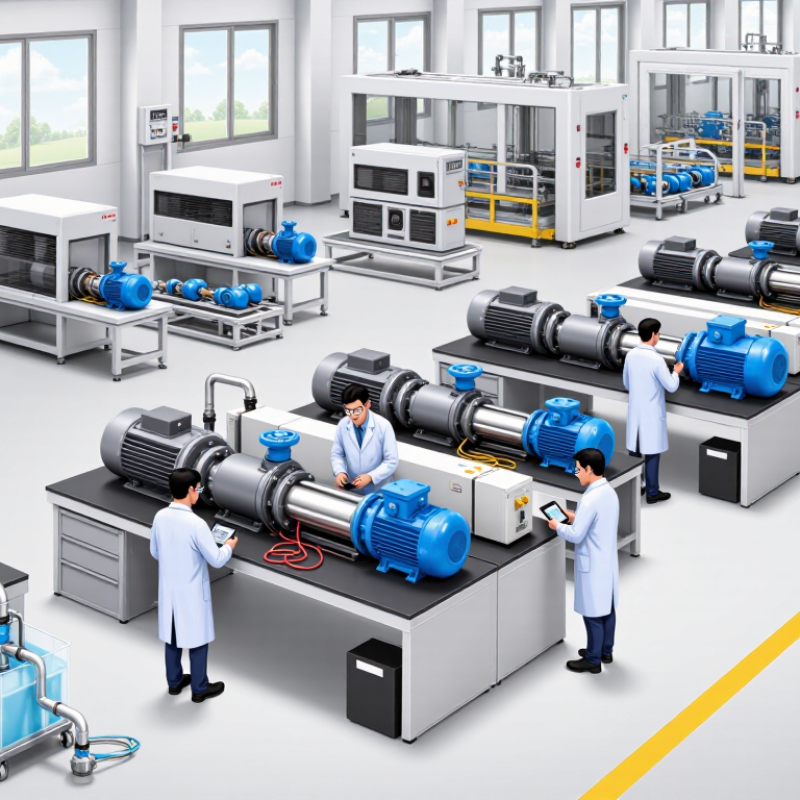
An air conditioning pump is a mechanical device that moves water or condensate within a cooling system. It supports stable operation when gravity alone cannot provide enough drainage or circulation. Common examples include condensate pumps, chilled-water pumps, and heat-transfer fluid pumps.
A condensate pump removes water collected during dehumidification. Without proper drainage, moisture may damage ceilings, insulation, or electrical components.
Chilled-water pumps circulate cooled water between the air handler and the cooling source. Their flow rate affects room temperature, energy use, and compressor workload. Even a small blockage can reduce cooling performance.
Pump selection requires more than checking horsepower. Technicians should examine lift height, pipe length, fluid temperature, pressure loss, and expected operating hours. A pump that is too weak may cycle continuously. One that is oversized can waste energy and create unnecessary pipe noise. Field inspections often reveal simple problems, such as a dirty inlet screen or a poorly sloped drain line.
Maintenance records improve reliability. Workers can compare vibration, sound, flow, and drainage patterns over time. Unusual rattling deserves attention. However, noise alone does not prove failure. Installation quality, air pockets, and water chemistry can produce similar symptoms. Pump sizing is sometimes treated as a routine calculation, but real buildings are less predictable. That assumption deserves review.
China’s Position in the Global Air Conditioning Pump Industry
China has become a major production base for air conditioning pumps worldwide. Its advantage comes from mature supply chains, skilled machining, and large-scale assembly. Motors, impellers, seals, sensors, and control boards can often be sourced within one industrial region. This shortens development cycles and supports competitive pricing. Chinese manufacturers also serve residential, commercial, and industrial cooling projects. Their products appear in systems used across Asia, Europe, the Middle East, and the Americas.
Technical capability is improving, especially in energy efficiency and variable-speed control. Many factories now use automated testing for flow rate, vibration, insulation, and endurance. However, the picture is not perfect. Quality consistency can differ between suppliers, even when product specifications look similar. Field experience shows that noise, seal wear, and voltage compatibility still deserve close attention. Reliable exporters should provide traceable materials, clear test reports, and responsive after-sales support. Certification matters, but practical testing matters too.
Tips: Check pump performance under real operating temperatures. Confirm voltage, connection size, noise limits, and spare-part availability. Request endurance data instead of relying only on catalog claims. A sample may perform well, yet mass production can reveal weaknesses. Independent inspection is worth considering for large orders.
China Top Air Condition Pump Manufacturers Worldwide? - China’s Position in the Global Air Conditioning Pump Industry
| Industry Dimension | Air Conditioning Pump Segment | China’s Position | Global Market Relevance | Common Technical or Compliance Reference |
|---|---|---|---|---|
| Product Type | Condensate removal pumps used in split air conditioners, fan-coil units, cassette units and ducted systems. | China has a broad supplier base for compact condensate pumps, subassemblies and private-label production. | Demand is linked to cooling equipment installation, especially where gravity drainage is not practical. | Electrical safety and appliance requirements are commonly evaluated under the IEC 60335 series, depending on the product design and market. |
| Product Type | Circulation pumps for chilled-water and heating, ventilation and air-conditioning systems. | Chinese manufacturers serve residential, commercial and light-industrial HVAC applications, with product ranges covering both fixed-speed and electronically controlled pumps. | Energy efficiency and variable-speed control are important in building HVAC retrofits and new construction. | Performance evaluation may involve hydraulic testing, motor efficiency requirements and regional building-system regulations. |
| Product Type | Drainage, lift and condensate transfer pumps for commercial air-handling equipment. | China benefits from an integrated supply chain for motors, molded parts, electronics, seals and small pump assemblies. | Commercial demand is supported by offices, hotels, retail buildings, hospitals and data-related facilities. | Installation requirements normally depend on local electrical codes, drainage rules and equipment certification procedures. |
| Manufacturing Capability | Motor, impeller, housing, sensor, controller and assembly production. | China is one of the world’s major manufacturing bases for HVAC equipment and associated electromechanical components, enabling high-volume sourcing and customization. | Vertical supply chains can reduce lead times and support multiple voltage, frequency, connector and mounting configurations. | Supplier qualification commonly includes process audits, incoming-material controls, end-of-line testing and traceability. |
| Customization | OEM and ODM designs for pump head, flow rate, lift height, noise level, voltage, sensor functions and communication interfaces. | Chinese production networks are widely used for application-specific designs and contract manufacturing without requiring a consumer-facing brand. | Customization is valuable because HVAC equipment varies by regional voltage, drainage layout, climate and installation practice. | Technical files should normally specify rated voltage, input power, flow, maximum head, operating temperature and duty cycle. |
| Export Orientation | Small pumps and HVAC subassemblies supplied to equipment manufacturers, distributors and system integrators. | China has strong export logistics and extensive experience supplying components for international HVAC supply chains. | Export competitiveness is influenced by certification, documentation, after-sales support, packaging, tariff treatment and delivery reliability. | Relevant requirements vary by destination and may include CE-related conformity in the European market, UK conformity requirements, or North American certification pathways. |
| Regional Strength | High-volume production of compact pumps and electromechanical HVAC components. | The Yangtze River Delta, Pearl River Delta and other established manufacturing clusters provide access to electronics, plastics, precision machining and export infrastructure. | Regional specialization supports cost control, rapid tooling and scalable production. | Actual capability should be verified through factory audits, production-line evidence and product test reports. |
| Technology Trend | Low-noise operation, brushless motors, variable-speed control, compact form factors and smart fault detection. | Chinese suppliers increasingly support electronically controlled and sensor-integrated pump designs for modern HVAC systems. | Efficiency regulations and building decarbonization policies are increasing interest in lower-energy auxiliary equipment. | Assessment may include electrical efficiency, electromagnetic compatibility, acoustic performance and protection against abnormal operation. |
| Quality Evaluation | Reliability of motor insulation, bearings, seals, impellers, float switches, control boards and drainage performance. | Quality varies by supplier; strong purchasing programs typically use design validation, life testing and documented process controls. | Failure of a condensate pump can cause water leakage, equipment shutdown or building damage, making reliability a key selection factor. | Recommended checks include continuous-run testing, high-low voltage testing, blocked-flow testing, leakage testing and temperature-rise testing. |
| Buyer Selection Criteria | Flow rate, maximum lift, noise, power consumption, operating temperature, compatibility, certification and service support. | China is competitive when suppliers can combine compliant design, stable production, customization and responsive technical support. | Price alone is insufficient for international HVAC projects because installation compatibility and lifecycle reliability directly affect total cost. | Buyers should request datasheets, drawings, test reports, material declarations, warranty terms and change-control procedures. |
| Overall Position | Residential, commercial and light-industrial air-conditioning pump supply. | China is a major global sourcing and manufacturing center, particularly for compact pumps, OEM/ODM production and HVAC component integration. | China competes with established manufacturing regions in Europe, North America and other parts of Asia; supplier selection should be based on verified technical and compliance performance rather than country of origin alone. | International buyers should confirm conformity with the regulations and certification rules of the destination market before commercial shipment. |
Data scope: This table presents a non-brand, industry-level comparison of air-conditioning pump manufacturing capabilities and market factors. It does not constitute a ranked list of individual manufacturers or a claim of market share. Certification and regulatory requirements depend on the final product design and destination market.
Key Types of Air Conditioning Pumps Made in China
China’s air-conditioning pump sector serves residential, commercial, and industrial systems worldwide. The main types include condensate drain pumps, chilled-water circulation pumps, heat-pump water pumps, and refrigerant recovery pumps. Condensate models remove water from wall-mounted indoor units. They are compact, quiet, and often installed above ceilings or inside narrow service channels.
Chilled-water pumps handle larger buildings. Variable-speed designs adjust flow when cooling loads change. This can reduce wasted electricity during mild weather. The International Energy Agency’s The Future of Cooling report states that global space-cooling electricity demand could more than triple by 2050. That forecast increases pressure on Chinese manufacturers to improve motor efficiency, noise control, and long-term reliability. In practice, a pump’s performance may look excellent on paper, yet installation errors can still cause vibration or drainage failure. Specifications deserve careful checking.
Tips: Match pump head, flow rate, voltage, and water temperature with the system design. Ask for test data under realistic operating conditions. Review insulation, corrosion resistance, and cleaning access before purchasing. EN 13053 and related HVAC testing practices can support more consistent evaluation, but standards do not replace field inspection. A useful supplier should provide drawings, sample testing, spare-part details, and traceable quality records. The best choice is not always the cheapest one.
How to Evaluate Leading Chinese Manufacturers
Choosing leading Chinese air-conditioning pump manufacturers requires more than comparing online prices. Start with technical fit. Check flow rate, pressure range, motor efficiency, operating temperature, and refrigerant-system compatibility. Ask for drawings, material specifications, and a recent test report. A capable factory should explain these figures clearly, not hide behind general claims.
Visit the production site when possible. Observe winding, assembly, sealing, and end-of-line testing. Inspect whether serial numbers connect each pump to inspection records. Request samples from regular production, not specially prepared units. Test vibration, noise, power consumption, and continuous operation under realistic loads. Small differences matter. A pump may pass a short test yet struggle after months of cycling.
Tips: Confirm certification scope, warranty terms, spare-part availability, and response time. Ask who handles failures after installation. Compare at least three samples using the same test conditions. Keep written specifications.
Professional evaluation should also examine the manufacturer’s engineering depth. Can its team adjust impellers, seals, controllers, or mounting dimensions without weakening reliability? Request failure-analysis examples, maintenance guidance, and evidence of quality-system audits. Independent laboratory verification adds credibility, especially for efficiency and electrical safety claims. Communication is another practical test. Delayed answers, changing specifications, or vague tolerances often predict project problems. Some suppliers may offer impressive documentation, but paperwork alone is not performance. Recheck critical data through your own inspection or a qualified testing agency.
How to Evaluate Leading Chinese Air-Conditioning Pump Manufacturers
A practical 100-point procurement framework based on measurable manufacturing, compliance, performance, and supply-chain evidence.
The weighting emphasizes product performance and reliability while also considering international compliance, production capability, quality systems, energy efficiency, delivery reliability, and after-sales support. Buyers should verify each category using test reports, certifications, factory audits, warranty records, and shipment-performance data rather than relying only on marketing claims.
Global Applications, Standards, and Export Capabilities
China’s air-conditioning pump manufacturers increasingly serve residential towers, data centers, hospitals, and process-cooling facilities. The IEA’s The Future of Cooling reports that space-cooling energy use has more than tripled since 1990. It could more than triple again by 2050. This demand favors compact pumps, variable-speed control, corrosion-resistant materials, and stable performance under high humidity.
Export readiness depends on more than factory capacity. A reliable supplier should match pump assemblies with IEC 60335 safety requirements, ISO 5149 refrigeration-system guidance, and EN 378 where European projects require it. Applications using flammable refrigerants need carefully evaluated electrical protection, airflow, sealing, and installation instructions. Certification scope matters. A general factory certificate cannot replace product-level testing.
Documentation matters. Export-capable manufacturers normally provide performance curves, noise data, material declarations, inspection records, and traceable batch numbers. The 2023 UNEP Cooling Emissions and Policy Synthesis Report also highlights efficiency gains as cooling demand expands, making seasonal performance increasingly important. In practice, shipping damage, voltage differences, and unclear spare-parts procedures still create avoidable failures. Field reality differs. Buyers should request witnessed testing and sample validation before large orders. Some suppliers remain strong in production but weaker in local service, which deserves honest review.