Aller au contenu principal

China Best Aluminum Motor Housing Supplier for Global Buyers

Choosing a China best aluminum motor housing supplier requires more than comparing prices or polished product photographs. Global buyers need stable dimensions, clean casting surfaces, reliable sealing, and predictable thermal performance. In real projects, a housing may face vibration, heat cycles, moisture, and repeated assembly. Small defects can become expensive failures.

Casting authority John Campbell wrote, “The quality of a casting is determined by the quality of the liquid metal.” This principle remains highly relevant to aluminum motor housing production. A capable supplier should explain its alloy selection, melting controls, mold design, machining process, and inspection records. It should also provide practical evidence, such as dimensional reports, leak tests, surface checks, and sample approval procedures. Experience matters here. A supplier that understands motor assemblies can identify problems around bearing seats, bolt holes, cable exits, and cooling ribs before mass production begins.

Still, no supplier is perfect. Even an experienced factory may face porosity, tool wear, or inconsistent finishing. That reality deserves honest discussion. Buyers should ask how defects are recorded, corrected, and prevented from returning. Factory visits, video inspections, and traceable samples can reveal more than a sales presentation. Clear communication is equally important, especially when drawings change across time zones. The strongest partnership is not built on confident promises alone. It grows through measurable quality, transparent feedback, and steady improvement. This guide examines the practical factors that help global buyers select a dependable aluminum motor housing supplier in China.
China Best Aluminum Motor Housing Supplier for Global Buyers

What Is an Aluminum Motor Housing and Why Does It Matter?

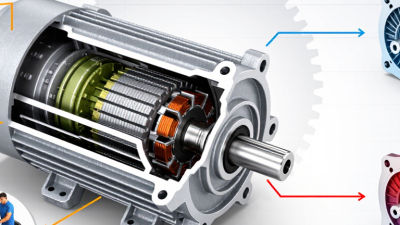
An aluminum motor housing is the rigid outer shell around an electric motor’s internal parts. It protects the stator, rotor, bearings, and wiring from dust, impact, and moisture. In many designs, it also supports mounting feet, cooling fins, and bearing seats. The housing keeps the rotor centered during operation. Small errors matter. Poor alignment can increase vibration, noise, and bearing wear.

Aluminum is valued for its low density and useful thermal conductivity. A lighter housing can simplify equipment installation and reduce handling effort. It also transfers motor heat toward the outer surface, where fins or airflow can remove it. Cast, machined, or extruded housing designs serve different production needs. Each method leaves different risks. Porosity, thin walls, and uneven machining may reduce service life. Pressure testing and dimensional inspection help expose these problems. Not every shiny surface proves quality.

For global buyers, a reliable specification should cover alloy, wall thickness, tolerances, mounting dimensions, and surface treatment. Ask for material certificates, inspection records, and sample approval before larger production. Check bearing-seat roundness carefully. I have seen small drawing changes create expensive assembly delays. A supplier may meet the main dimensions but miss a sealing groove or cable opening. That detail can stop installation. Performance is rarely decided by appearance alone.

China Best Aluminum Motor Housing Supplier for Global Buyers

What Is an Aluminum Motor Housing and Why Does It Matter?

An aluminum motor housing is the protective structure surrounding an electric motor. It supports internal components, helps dissipate heat, and protects the motor from mechanical and environmental stress. Compared with common steel and cast-iron alternatives, die-cast aluminum typically offers much lower weight, higher thermal conductivity, and good corrosion resistance. The values below are representative room-temperature properties for commonly used engineering materials; actual performance varies by alloy, temper, casting quality, and design.

Reference values: aluminum A380, carbon steel 1018, and gray cast iron typical datasheet ranges. Density is shown in kg/L, thermal conductivity in W/m·K, and tensile strength in MPa.

Key Materials and Design Features of Chinese Motor Housings

China Best Aluminum Motor Housing Supplier for Global Buyers

Key Materials and Design Features of Chinese Motor Housings

Chinese motor housings commonly use cast aluminum alloys for their balance of weight, strength, and thermal performance. Die-cast aluminum supports complex shapes and consistent production for medium and large orders. For demanding applications, heat-treated alloys can improve mechanical stability. However, alloy selection should match the motor’s load, speed, and working temperature.

A reliable housing design begins with accurate bearing seats and a stable mounting surface. Many housings include internal ribs to reduce vibration without adding excessive mass. External fins increase contact with air and help release heat during continuous operation. Wall thickness must remain even where possible. Thick sections can create shrinkage defects.

Sealing details also matter. Machined grooves may hold O-rings against dust and moisture. Drain paths can prevent liquid from remaining near cable openings. Surface treatments, such as anodizing or powder coating, may improve corrosion resistance in humid environments. Yet coating thickness can affect assembly clearance. This point is often underestimated.

From practical production checks, dimensional inspection should cover shaft alignment, bolt-hole spacing, and bearing concentricity. A few microns may matter in high-speed assemblies. Casting alone is not enough. CNC finishing is usually required for critical interfaces. Some drawings also leave unclear tolerance requirements, creating avoidable discussions between buyers and suppliers. Clear samples and inspection records reduce that risk.

How Aluminum Motor Housings Are Manufactured in China

China Best Aluminum Motor Housing Supplier for Global Buyers

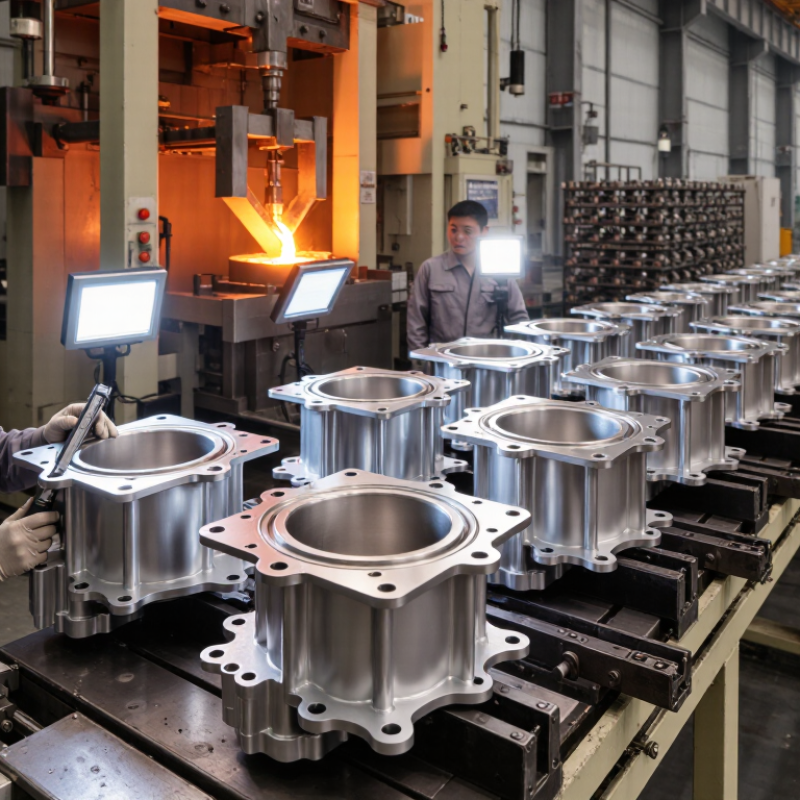
Aluminum motor housings are usually made through high-pressure die casting in China. The process begins with aluminum alloy ingots, melted near 700°C, and injected into a steel die at high speed. The die forms cooling fins, mounting ears, and cable openings in seconds. International Aluminium Institute data recorded about 41.5 million tonnes of primary aluminum production in China in 2023. This scale supports stable material access, but it does not guarantee consistent casting quality.

After ejection, workers remove flash and inspect visible surfaces. CNC machining then creates bearing seats, bolt holes, and sealing faces. These areas need careful control because even small errors can cause vibration or leakage. Many factories use coordinate measuring machines, air gauges, and pressure testing. A practical supplier should also track melt temperature, die temperature, injection pressure, and batch numbers. ISO 9001-based quality systems are common, yet paperwork alone cannot reveal hidden porosity.

Some housings receive shot blasting, anodizing, or powder coating. These finishes improve appearance and corrosion resistance. The U.S. Department of Energy has reported that aluminum components can reduce weight by roughly 40% compared with cast iron in suitable applications. That advantage matters for compact motors. Still, thinner walls may reduce strength if the design is rushed. Prototype testing should include heat cycling, torque loading, and vibration checks. Mistakes happen. Good manufacturers document them, investigate causes, and revise the process.

Quality Standards for Reliable Motor Housing Suppliers

Choosing the best aluminum motor housing supplier requires more than comparing prices. Global buyers should examine alloy consistency, wall thickness, machining accuracy, and surface protection. In practical factory audits, I check material certificates, furnace records, and random samples from different production batches. A reliable supplier can explain each result clearly.

Quality standards should cover casting, heat treatment, machining, and final inspection. Critical dimensions need calibrated tools, not visual guesses.

Housing samples should pass leak testing, torque checks, and temperature-cycle evaluations. Threaded holes must remain accurate after repeated assembly.

Traceability also matters. Each batch should connect to inspection records and production dates.

No supplier is perfect. A certificate alone does not prove stable performance. Ask for recent test data, not only prepared samples. Small defects sometimes appear after long operation, and this is where suppliers must respond honestly. That honesty builds confidence.

Tips:

  • Request a pilot order before volume production.
  • Confirm the aluminum grade and tolerance range in writing.
  • Visit the facility when possible.
  • Review rejected-part records, too. They may reveal more than polished presentations.

How Global Buyers Can Choose the Best Chinese Supplier

China Best Aluminum Motor Housing Supplier for Global Buyers

Choosing a Chinese aluminum motor housing supplier requires more than comparing quotations. Global primary aluminum production reached 70.6 million tonnes in 2023, according to the International Aluminium Institute. This scale supports competitive sourcing, but capacity does not prove process control. Ask for alloy certificates, casting records, machining tolerances, and recent inspection reports. A reliable supplier should explain porosity controls, heat treatment, leak testing, and dimensional measurement methods in clear terms.

Request production samples before approving a large order. Inspect mounting holes, bearing seats, wall thickness, and surface finish. Use a coordinate measuring machine report for critical dimensions. For pressure-sensitive housings, request documented air-leak results and sectioned sample evidence. ISO 9001 certification is useful, but it cannot replace an on-site process audit. Look at maintenance logs, operator training, nonconformance records, and corrective actions. Records matter.

Sustainability also deserves practical attention. The International Aluminium Institute reports that recycled aluminum can require about 95% less energy than primary aluminum. Ask whether recycled content is controlled by batch and supported by traceable documentation. However, recycled feedstock alone does not guarantee stable mechanical performance. I would verify chemistry, tensile results, and casting consistency rather than accepting a general environmental claim. A low quote may hide tooling changes, weak packaging, or repeated rework. Agree on drawings, acceptance limits, sampling plans, delivery terms, and communication responsibilities before production starts. Some buyers skip this step. That mistake is expensive.