10 Best Steering Column Components for Global Buyers?
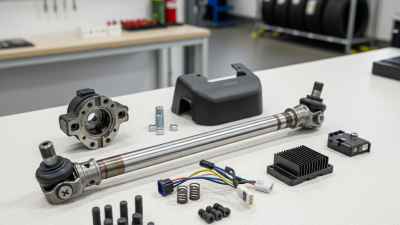
Choosing the right Steering Column components affects safety, control, comfort, and vehicle durability. For global buyers, the decision is rarely about price alone. It involves material strength, collapse performance, steering feel, electronic compatibility, and supply consistency. A column that performs well in a European passenger car may require different testing for a commercial vehicle in Southeast Asia.
Dr. Peter Holdmann, a long-time chassis and steering systems specialist, expressed the core principle clearly: “Steering is a system, not merely a part.” That view matters when comparing shafts, jackets, brackets, bearings, universal joints, adjustment mechanisms, sensors, and energy-absorbing structures. Each component must work within the complete steering architecture.
This guide examines ten important Steering Column components for international procurement teams. It considers practical details, including forged steel interfaces, corrosion protection, tolerance control, vibration behavior, and installation space. It also addresses supplier documentation, traceability, validation testing, and after-sales support. These details can decide whether a component survives years of road vibration or creates costly field complaints.
The ranking is not absolute. It depends on vehicle class, platform design, production volume, and regional requirements. That limitation deserves attention. A low-cost component may appear efficient, yet inconsistent tolerances can increase assembly time. An advanced part may offer better performance, but not always better value. Buyers should question catalogue claims, request test evidence, and review samples under realistic loads. Small details matter. One overlooked interface can affect the entire steering system.
Steering Column Components: Functions, Types, and Applications
10 Best Steering Column Components for Global Buyers?
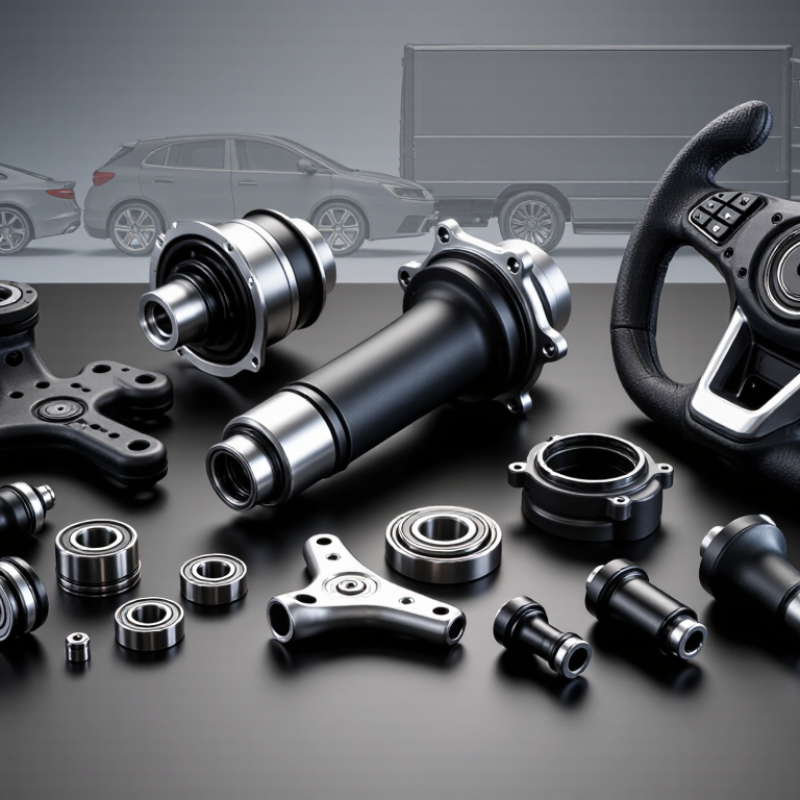
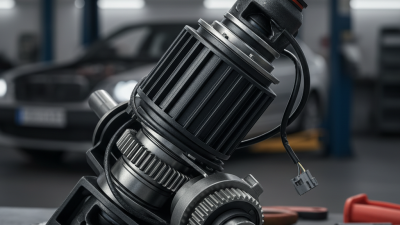
Steering columns connect the driver’s input to the steering gear while protecting occupants during a crash. Common components include the steering shaft, collapsible tube, bearings, universal joints, tilt mechanism, and telescopic adjustment. Newer electric power steering columns may also include torque sensors, control wiring, and an assist motor. Each part affects steering precision, noise, service life, and cabin ergonomics. Small tolerances matter.
Safety is central. The World Health Organization’s Global Status Report on Road Safety 2023 estimates 1.19 million annual road deaths worldwide. This makes energy absorption and controlled column collapse practical design priorities, not optional features. Buyers should check compliance with FMVSS 203 and 204 in the United States, or UN Regulations Nos. 12 and 79 for relevant international applications. Commercial vehicles often need reinforced shafts and stronger joints. Passenger cars usually prioritize low mass, adjustment range, and crash performance.
Applications vary widely. Manual columns remain useful in cost-sensitive vehicles, while electric systems support lane assistance and automated parking functions. Off-road equipment demands sealing against dust, water, and vibration. Inspect spline accuracy, corrosion resistance, weld quality, and adjustment-cycle results. A polished catalog can still hide weak testing. I would request fatigue data, crash validation records, and traceable material certificates before approving a supplier. The overlooked bearing may become the expensive problem.
Top Ten Steering Column Components for Global Vehicle Buyers
For global vehicle buyers, steering column sourcing requires more than a low unit price. The ten key components are the steering shaft, collapsible tube, universal joint, intermediate shaft, column bearings, tilt mechanism, telescopic mechanism, coupling, lock housing, and steering-angle sensor. Each part affects control, comfort, crash performance, or electronic communication.
From practical procurement experience, buyers should inspect shaft runout, weld quality, spline accuracy, and bearing movement. A steering column should adjust smoothly without clicking or binding. During crash validation, the collapsible section must absorb energy predictably. Suppliers should provide material certificates, dimensional reports, fatigue data, and traceable inspection records. Check the safety regulations that apply in each target market. Requirements can differ between regions.
Small details matter. A loose coupling may create steering play after thousands of kilometers. Poor surface treatment can cause corrosion around a joint. Yet no checklist is perfect. A polished sample can still hide inconsistent production quality. I have found that supplier audits, batch sampling, and independent testing reveal weaknesses earlier. One limitation remains: laboratory results may not represent dusty roads, cold starts, or repeated adjustment by drivers. Buyers should also verify packaging, replacement availability, communication speed, and technical support before approving a global supply contract.
Key Materials, Safety Features, and Performance Standards
10 Best Steering Column Components for Global Buyers?
Key Materials, Safety Features, and Performance Standards
Global buyers should evaluate the complete steering column, not only its visible shaft. The ten critical components include the steering shaft, jacket, bearings, coupler, tilt mechanism, collapse cartridge, mounting brackets, fasteners, sensors, and electric-assist interface. High-strength steel offers dependable load capacity, while aluminum can reduce mass. Polymer isolators help control vibration and cabin noise. However, lighter is not always better. Material certificates, fatigue results, corrosion testing, and traceability should support every purchase decision.
Safety performance requires measurable evidence. The WHO Global Status Report on Road Safety 2023 records about 1.19 million annual road deaths worldwide. That figure keeps steering protection highly relevant. Buyers should check collapse behavior, controlled energy absorption, joint retention, and post-impact movement. NHTSA FMVSS 203 addresses steering control impact protection, while FMVSS 204 limits rearward steering-column displacement. UNECE Regulation No. 12 also evaluates steering-mechanism behavior during collisions. These requirements differ by market, so one test file may not satisfy every region.
Functional reliability matters during daily driving. ISO 26262 supports risk-based development for safety-related electrical and electronic functions, including steering assistance interfaces. IATF 16949-style process controls can strengthen supplier consistency, but certification alone proves little. Ask for endurance data, temperature cycling from roughly -40°C to 85°C, salt-spray results, and documented failure analysis. In practice, small bearing noise or connector looseness can reveal weak validation. Some specifications still look impressive, yet lack real vehicle evidence. That deserves a second review.
How to Compare Suppliers, Compatibility, and Manufacturing Quality
The ten most critical categories include shafts, universal joints, bearings, collapsible mechanisms, brackets, seals, fasteners, sensors, torque interfaces, and electric-steering connectors. Supplier comparisons should begin with evidence, not catalog claims. The WHO Global Status Report on Road Safety 2023 recorded about 1.19 million annual road deaths. Steering reliability therefore requires serious validation. Request drawing revisions, spline profiles, collapse stroke, torque limits, and left- or right-hand-drive data. Confirm every rack-to-column interface.
Compatibility must be tested, not promised. Check dimensional tolerances, material grades, corrosion requirements, and installation access. For electronic components, request communication protocols, diagnostic behavior, and electromagnetic compatibility records. UNECE Regulation No. 79 addresses steering equipment requirements in applicable markets. ISO 26262 supports functional-safety processes, but it does not automatically certify a component. A certificate alone proves little.
Manufacturing quality becomes visible through controlled records. Ask for IATF 16949 status, PPAP documentation, control plans, measurement-system analysis, and process-capability data. Review Cpk results for splines, bearing seats, and collapse force. Audit heat treatment, weld penetration, coating thickness, and end-of-line torque testing. The ISO Survey 2023 reported more than one million ISO 9001 certificates worldwide, so certification is common. It is not a complete quality guarantee. One weakness in many sourcing comparisons is excessive focus on price. Production samples can expose more than polished presentations. Supplier audits should include traceability drills and failure-response timing.
Global Purchasing Factors: Certifications, Costs, and After-Sales Support
10 Best Steering Column Components for Global Buyers?
A reliable steering column starts with the right component mix: shaft, upper bearing, lower bearing, universal joint, tilt mechanism, telescopic tube, collapsible bracket, torque sensor, lock actuator, and wiring connector. Global buyers should request traceability for each safety-related part. ISO Survey 2023 reported more than one million ISO 9001 certificates worldwide, but certification alone does not prove product quality. Check the certificate scope, audit date, and manufacturing site. For vehicle programs, IATF 16949 alignment and documented failure testing provide stronger evidence. UNECE WP.29 requirements may also affect steering locks, sensors, and electronic functions.
Cost comparisons need more than unit prices. Include tooling, inspection, packaging, duties, transport, warranty reserves, and replacement lead times. The World Bank Logistics Performance Index 2023 evaluated logistics across 139 economies and highlighted reliability as a major supply-chain concern. A cheaper column component can create expensive delays at customs or during line stoppages. Local currency changes can hurt too. My own purchasing reviews often underestimate service costs. That mistake deserves more attention.
Tips: Ask for PPAP records, material certificates, dimensional reports, and sample failure data. Confirm a defined response time for warranty claims. Keep two qualified sources for critical parts, where practical. Require spare sensors and connectors for field repairs. Test cold starts, vibration, corrosion, and repeated adjustment cycles. After-sales support should include multilingual documents, remote troubleshooting, and a clear replacement process. A supplier may promise fast support; measure it with written service targets.
10 Best Steering Column Components for Global Buyers
Indicative global purchasing benchmark: average component cost, certification relevance, and after-sales priority.
Related Posts
-
2026 How to Identify Key Components of a Steering Column?
-
7 Tips for Sourcing Nova Steering Column Parts?
-
10 Essential Components of a Steering Column You Need to Know
-
Why is the PSC Steering Column Essential for Vehicle Safety and Performance?
-
2026 How to Choose the Best PSC Steering Column for Your Vehicle?
-
China Top 10 Steering Column Components for Global Buyers?