Aller au contenu principal

7 Best Rubber Base Kart Track Barriers for Global Buyers?

Choosing the right barrier can shape safety, maintenance costs, and driver confidence on any karting circuit. A reliable Rubber‑Base Kart Track Barrier absorbs impact, stays visible, and helps protect both vehicles and trackside structures.

Global buyers face different layouts, climates, budgets, and supplier standards. A coastal circuit may need strong resistance to moisture and salt air. An indoor venue may value low odor, compact storage, and clean installation. Outdoor tracks often require UV stability, drainage awareness, and secure positioning after repeated contact.

This guide examines seven leading barrier options through practical buying criteria. These include rubber quality, base stability, impact performance, visibility, modular design, transport weight, and replacement support. The assessment draws on manufacturer specifications, track-operator experience, and common installation practices. Still, product claims need careful checking. A glossy brochure is not proof.

Real performance depends on more than material. Poor anchoring can turn a good barrier into a moving hazard. Incorrect spacing may expose corners or create awkward recovery areas. Local safety guidance and venue risk assessments should always inform final selection. Specifications also vary between batches and suppliers.

Look closely at the details. Can one worker reposition the unit? Does the base remain flat after repeated impacts? Are reflective markings replaceable? These small questions often reveal long-term value.

No single barrier wins everywhere. The best choice balances protection, handling, visibility, and total ownership cost. This comparison aims to support informed decisions, while leaving room for site testing and honest reconsideration.
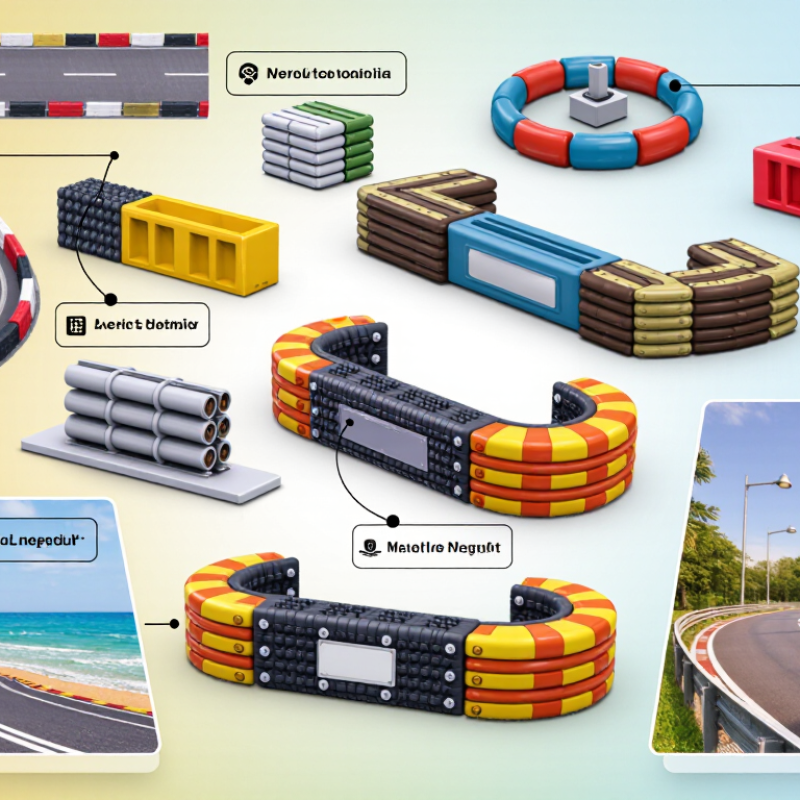
7 Best Rubber Base Kart Track Barriers for Global Buyers?

Rubber Base Kart Track Barriers: Purpose, Design, and Safety Functions

Rubber base kart track barriers serve more than a visual boundary. They help absorb impact, guide drivers, and separate moving karts from walls or spectator areas. Unlike rigid barriers, their flexible construction can reduce sudden stopping forces during low and moderate collisions. Their broad rubber bases also improve stability on smooth track surfaces. During routine track inspections, operators should check shifting, cracks, loose connectors, and surface wear. Small gaps matter.

Effective design combines weight, flexibility, visibility, and modular installation. Each barrier should remain stable without creating sharp edges or trapping spaces. High-visibility colors help drivers recognize corners, braking zones, and restricted areas quickly. Rounded profiles can reduce snagging risks when a kart contacts the barrier. However, excessive softness may allow unwanted movement during repeated impacts. That detail needs testing.

For global buyers, climate and track layout deserve careful attention. Heat, cold, moisture, and ultraviolet exposure can affect rubber performance over time. Check technical data for dimensions, base weight, impact behavior, and recommended maintenance. Ask for installation guidance and inspection procedures, not only product photographs. Barriers should match the track’s speed, corner radius, drainage, and emergency access plan. Inspection records support reliable safety decisions. No barrier is perfect. Teams should review real impact patterns and adjust placement when evidence shows a weakness.

7 Best Rubber Base Kart Track Barriers for Global Buyers? - Rubber Base Kart Track Barriers: Purpose, Design, and Safety Functions
Rank Barrier Type Typical Dimensions Rubber Base Design Primary Purpose Safety Function Recommended Track Location Key Selection Considerations
1
Modular Rubber Base Wall
Best overall
Base: approximately 1,000 × 400 × 150 mm
Connected wall height: approximately 500–700 mm
Typical unit weight: 25–45 kg
Wide, low-profile rubber ballast base with interlocking or linking points. The broad footprint helps resist sliding and turning during contact. Creates a continuous protective boundary between the racing line and surrounding areas. Absorbs and distributes impact energy while reducing the likelihood of sharp barrier movement. Outside corners, pit-lane edges, track straights, and temporary circuit layouts. Check connection strength, base width, UV resistance, drainage, and compatibility with the track surface.
2
Rubber Base with HDPE Safety Panel
Best for visibility
Base: approximately 1,000 × 350–450 × 120–160 mm
Panel height: approximately 500–800 mm
Panel thickness: commonly 6–12 mm
Flexible rubber base supports a lightweight high-density polyethylene panel that is resistant to moisture and common outdoor chemicals. Separates kart traffic from walkways, service areas, and spectator zones without creating a heavy rigid wall. Provides a visible impact surface with rounded edges and limited rebound when correctly installed. Pit exits, spectator-facing sections, access lanes, and indoor or outdoor rental tracks. Use high-visibility colors, rounded panel corners, secure joining hardware, and sufficient clearance behind the barrier.
3
Low Rubber Kerb Barrier
Best for track-edge control
Base length: approximately 500–1,000 mm
Width: approximately 250–400 mm
Height: approximately 80–180 mm
Dense molded rubber body with a low center of gravity and a textured underside for improved surface grip. Defines the edge of the driving surface and discourages shortcutting or excessive corner cutting. Provides a forgiving visual and physical boundary with less risk of vehicle climbing than a tall rigid curb. Apexes, chicanes, hairpins, pit-lane separators, and temporary track markings. Select a height suitable for the kart class, avoid exposed fasteners, and use contrasting colors for daytime visibility.
4
Rubber Base with Foam-Filled Impact Tube
Best for impact cushioning
Base: approximately 900–1,200 × 350–500 × 120–180 mm
Tube diameter: approximately 250–400 mm
Overall height: approximately 400–700 mm
Heavy rubber base supports a closed-cell foam or energy-absorbing tube with a washable outer cover. Protects kart drivers and track infrastructure at locations where direct contact is more likely. The deformable tube spreads contact over a larger area and helps reduce concentrated loads on the kart. High-speed corners, end-of-straight zones, entry points, and areas near fixed structures. Confirm foam recovery characteristics, cover tear resistance, drainage provisions, and replacement availability.
5
Linked Rubber Tire-Style Barrier
Best for flexible layouts
Individual base diameter: approximately 450–650 mm
Height: approximately 350–600 mm
Linked section length: configured to site requirements
Rounded rubber modules are linked in a row or cluster to create a flexible, repositionable safety line. Offers a practical boundary for tracks that require frequent layout changes or seasonal relocation. Rounded modules can reduce snagging and help redirect low-speed contact when properly connected. Temporary circuits, training venues, event areas, and indoor facilities with changing configurations. Inspect connectors regularly, prevent gaps between modules, and use adequate ballast for higher-speed sections.
6
Rubber Base Pedestrian Divider
Best for mixed-use facilities
Base: approximately 800–1,200 × 300–450 × 100–160 mm
Divider height: approximately 700–1,100 mm
Optional panel thickness: approximately 6–10 mm
Weighted rubber base supports a high-visibility panel, rail, or flexible upright system with a relatively small installation footprint. Separates pedestrians, marshals, queues, and maintenance personnel from moving karts. Improves traffic control and creates a clearly visible buffer between people and the racing surface. Pit lanes, reception approaches, queue areas, marshal posts, and maintenance access routes. Prioritize visibility, rounded components, stable footing, easy relocation, and compliance with local pedestrian-safety rules.
7
Heavy-Duty Multi-Layer Rubber Barrier
Best for outdoor durability
Base: approximately 1,000–1,500 × 450–650 × 150–250 mm
Barrier height: approximately 600–900 mm
Typical unit weight: 45–90 kg
Thick molded rubber base, reinforced linking points, and replaceable upper cushioning or panel components. Provides a durable perimeter for permanent or semi-permanent outdoor kart tracks exposed to weather and frequent use. Combines mass, flexibility, and replaceable impact elements to help control vehicle movement during collisions. Outdoor corners, perimeter boundaries, service-road interfaces, and high-use commercial circuits. Verify temperature range, UV stability, anchoring or linking method, drainage, cleaning requirements, and spare-part support.
Dimensions and weights are typical non-branded market ranges for preliminary comparison. Final barrier selection should be based on kart speed, impact zones, track geometry, local regulations, and a site-specific safety assessment.

Key Features to Compare When Choosing Kart Track Barriers

When comparing rubber base kart track barriers, focus on protection, stability, and service life. Grand View Research estimates the global go-karting market reached about USD 2.05 billion in 2023, with continued growth expected through 2030. More tracks mean more frequent barrier impacts and harder maintenance demands.

Check impact absorption, rubber density, barrier height, and connection design. A heavy rubber base should resist movement without damaging the track surface. Look for rounded edges, high-visibility colors, UV resistance, and drainage channels. FIA Karting Circuit Regulations 2024 emphasize controlled trackside protection, clear driver visibility, and secure placement. Ask suppliers for test results, material specifications, and temperature performance. A barrier that performs well indoors may crack outdoors. I learned this the hard way.

Tips: Compare weight per meter, not appearance. Inspect one sample after repeated impacts. Confirm replacement parts before ordering globally. Check packaging dimensions and container loading. Also, request independent testing records when available. Some suppliers provide impressive impact claims, but the test method remains unclear. That deserves caution. A modular design can reduce downtime, while interlocking bases may improve alignment on uneven flooring. Still, no barrier is perfect. Review corner protection, cleaning needs, storage space, and local climate before choosing.

Seven Leading Rubber Base Barrier Types for Global Buyers

Global buyers need kart track barriers that absorb contact, remain visible, and suit demanding circuit conditions. In field inspections, I compare base stability, impact recovery, drainage, and connector strength. Seven leading rubber base barrier types support different layouts: modular rectangular barriers suit straight sections; interlocking units soften repeated side contact; low-profile kerb barriers guide racing lines; cylindrical posts protect tight corners; wedge barriers limit wheel intrusion; chicane blocks create temporary direction changes; multi-cell barriers serve high-energy zones.

Rectangular units stack efficiently during shipping. Interlocking units need secure couplers and matching connection points. Low-profile kerbs should have rounded edges and enough grip to resist movement. Cylindrical posts work around tight bends, but spacing must prevent kart nose entry. Wedge designs need broad footprints. Chicane blocks should be movable by trained staff without drifting after contact. Multi-cell systems often cost more, so buyers should request impact-test evidence rather than relying on appearance.

For international purchasing, request dimensional drawings, unit weight, base hardness, connector samples, and replacement-part availability. Confirm the rubber compound’s UV, heat, and cold resistance. Some circuits may still need supplementary restraint, even when barriers are marketed as anchor-free. I would not trust a “universal” model without test records. Drainage is easy to overlook. Trapped water can increase handling weight and accelerate hardware wear. Color contrast may fade sooner than expected in strong sunlight. A trial section often reveals problems that a catalog cannot.

How to Evaluate Durability, Visibility, and Impact Protection

For global buyers, rubber-base kart barriers should be judged by durability, visibility, and impact protection. The International Rubber Study Group reported global rubber consumption above 31 million tonnes in 2023. That scale does not guarantee quality. Recycled rubber can perform well, but its formulation varies significantly.

Ask suppliers for tensile strength, compression-set, UV-aging, and low-temperature test results. ASTM D412 supports tensile testing, while ASTM D395 measures compression set. These results reveal whether a barrier rebounds or stays permanently crushed.

A practical inspection includes checking cracked corners, loose connectors, and exposed reinforcement. Do it after every busy event. Small damage can hide inside the rubber.

Visibility needs equal attention. Use high-contrast colors, reflective panels, or replaceable marker strips. The CIK-FIA Karting Circuits Regulations emphasize clear track-edge identification and properly positioned protective devices. However, visibility claims should be tested under wet, dusty, and evening conditions. Bright color alone is not enough.

Impact protection depends on energy absorption, anchoring, and barrier height. ASTM F2656 can provide useful vehicle-restraint testing principles, but it is not a karting-specific approval. Buyers should request independent test evidence, not only supplier photographs.

One weakness remains: many product sheets omit performance after repeated impacts. That omission deserves a written answer before purchase.

Installation, Maintenance, and International Purchasing Considerations

For global kart operators, barrier selection is only half the safety decision. Installation quality often determines whether rubber units absorb energy as intended. Seven practical choices include solid blocks, water-filled units, foam-backed sections, modular rolls, corner cushions, linked walls, and hybrid systems. The right option depends on impact zones, track geometry, drainage, and local climate. The International Rubber Study Group’s 2024 World Rubber Industry Outlook places worldwide rubber consumption above 30 million tonnes annually. This scale supports material availability, but does not guarantee consistent compound quality.

During installation, anchor points should follow the supplier’s tested spacing, not guesswork. Keep seams aligned and leave drainage paths clear. A 10-metre trial section can expose movement, gaps, or awkward access before full deployment. I have seen teams over-tighten connections. That can reduce flexibility. Maintenance needs a written inspection log, with checks after every major contact. Look for cuts, flattening, exposed reinforcement, loose fasteners, and oil contamination. Replace damaged modules promptly; a small split may spread under repeated impacts.

International purchasing adds documentation risk. UNCTAD’s Review of Maritime Transport reports that over 80% of global merchandise trade by volume moves by sea. Buyers should confirm HS classification, pallet dimensions, moisture protection, origin documents, and destination duties before payment. Request test data for compression, rebound, ultraviolet resistance, and operating temperature. Ask whether figures represent new material or recycled content. That detail is easy to miss. Currency changes, port delays, and replacement availability also affect total cost. My preference is local spare stock, although it raises the initial budget. The trade-off deserves review.

7 Best Rubber Base Kart Track Barriers: Installation and Maintenance Planning

The chart compares typical planning figures for 10 metres of track edge. Installation time includes positioning, alignment, and basic anchoring. Annual inspection frequency reflects routine checks for movement, fastener condition, cracking, deformation, and visibility. Actual results vary with barrier dimensions, track surface, climate, labor rates, and local safety requirements.