Aller au contenu principal

What Is the Best Cleanroom Window for 2026?

Choosing the best Cleanroom Window for 2026 is less about finding one “perfect” product and more about matching the window to the room’s risks. Grand View Research estimated the global cleanroom technology market at USD 5.4 billion in 2023, with continued growth projected through 2030. That expansion reflects rising demand across sectors such as pharmaceuticals, electronics, and medical devices. It also makes careful specification more important. A window that looks suitable in a catalogue may still create problems at the frame, seal, or wall junction.

Start with the room’s classification and operating conditions. ISO 14644-1 defines cleanroom air-cleanliness classes by particle concentration; it does not certify a window on its own. That distinction matters. Review the complete assembly, including glazing, frame material, perimeter seals, and installation details. Ask how easily surfaces can be cleaned, whether temperature differences could cause condensation, and how the unit handles pressure and routine maintenance. Clear sightlines help staff observe activity without opening doors, but visibility is only one part of performance.

Details decide.

For a 2026 project, compare documented specifications with the actual cleaning agents, temperature range, and wall system. Request test evidence and installation guidance from the manufacturer, then check that the evidence matches your intended use. A flush, sealed design may suit one facility; another may need stronger thermal or impact performance. There is no universal winner. Even a well-specified window can disappoint if installation is rushed—a practical point that product brochures sometimes underplay.
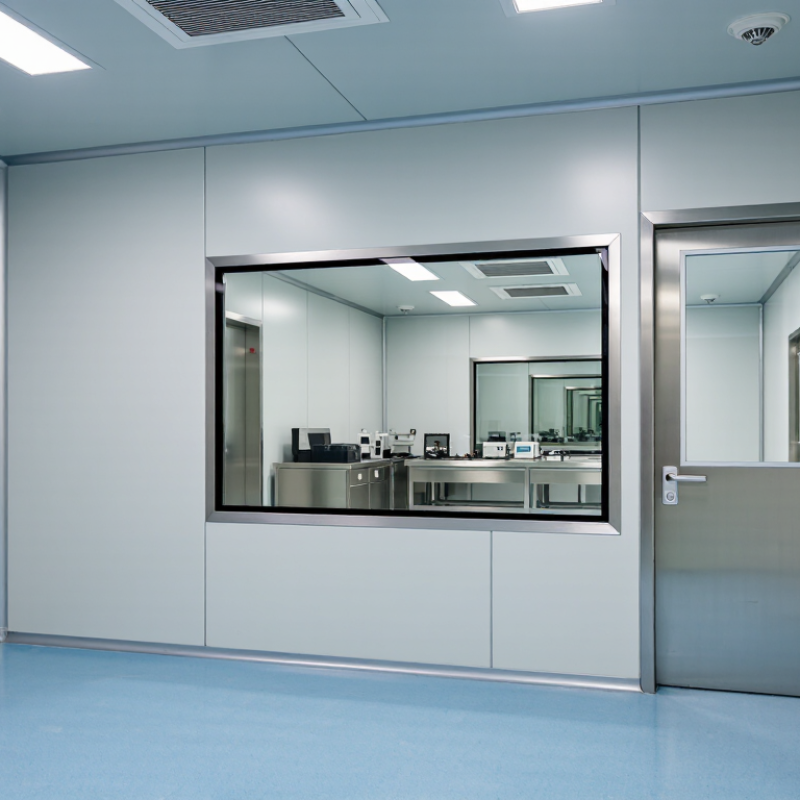
What Is the Best Cleanroom Window for 2026?

What Defines a Cleanroom Window and Its Role

A cleanroom window is a sealed viewing assembly built into a wall or partition between controlled spaces. Its glass, frame, seals, and installation must work together to limit particle traps and support routine cleaning. A smooth, flush face is easier to wipe than a recessed sill. Small gaps matter.

The window also helps staff observe work without entering the room. Clear sightlines can support monitoring, communication, and safer movement around equipment. Yet a window does not maintain cleanliness by itself. Airflow, pressure control, room finishes, and operating practices remain essential. That distinction is easy to overlook.

For a suitable design, consider the room’s cleanliness requirements, cleaning chemicals, temperature changes, and pressure differences. Check whether the glazing is single or insulating, how the frame joins the wall, and whether seals can be inspected. Condensation, glare, and reflections can also affect visibility. A sample viewed under actual room lighting may reveal issues drawings miss. There is no universal best window; the right choice depends on the space and how people use it. Even a well-specified assembly can disappoint if installation leaves uneven joints. The details deserve a second look.

What Is the Best Cleanroom Window for 2026?

A cleanroom window is a sealed glazing assembly designed to maintain a smooth, cleanable surface within a controlled environment. The chart compares indicative visible light transmittance (VLT) ranges for common glazing types; the bars show each range’s midpoint.

Typical VLT varies with glass thickness, coatings, and assembly design. The best choice depends on project requirements, including cleanability, flush installation, sealing, thermal performance, and condensation control. These glazing types do not by themselves indicate cleanroom certification.

Which Cleanroom Window Types and Materials Are Available?

Cleanroom windows come in several forms: single-pane, double-glazed, flush-mounted, fire-rated, and switchable-glass units. Single panes suit internal viewing where thermal performance is less important. Double glazing can reduce heat transfer and condensation risk, but its sealed edges need careful detailing. Flush-mounted windows create a smoother wall surface, with fewer ledges to collect dust.

Common materials include tempered or laminated glass, polycarbonate, and acrylic. Glass generally resists scratching and many cleaning agents well. Polycarbonate is lighter and impact-resistant, though it can scratch more easily. Acrylic offers clear viewing, but chemical compatibility should be checked before routine cleaning. ISO 14644-1:2015 sets airborne particle limits by cleanroom class; for Class 5, the limit is 3,520 particles per cubic metre at 0.5 micrometres or larger. A window does not set the room’s classification, but gaps, seals, and installation quality can undermine contamination control. Small details matter.

Tips: Match the window to the room’s cleaning chemicals, pressure conditions, and required visibility. Check sealant compatibility and inspect the frame-to-wall joint under bright light. It is easy to focus on glass thickness and overlook the perimeter. That part deserves a second look.

What Is the Best Cleanroom Window for 2026? - Which Cleanroom Window Types and Materials Are Available?
Window Type Typical Construction Key Advantages Considerations Common Applications Best Fit
Single-pane tempered glass One heat-treated glass pane installed in a sealed, flush-mounted frame. Hard, smooth surface; good visible-light transmission; resists scratching better than plastic glazing; cleans readily with compatible cleaning agents. Provides less thermal and sound insulation than a double-glazed unit. Tempered glass breaks into smaller pieces but is not designed to remain intact after breakage. Interior cleanroom partitions where straightforward visibility and easy surface cleaning are priorities. A practical general-purpose choice for interior viewing windows.
Laminated safety glass Two or more glass layers bonded with a plastic interlayer, commonly polyvinyl butyral (PVB) or an ionoplast interlayer. Interlayer helps hold fragments together if the glass breaks; can improve sound reduction compared with a single pane. Edge protection and compatible seals are important. Confirm that the assembly and interlayer suit the cleaning chemicals, temperature, and required safety performance. Locations where post-breakage fragment retention or additional impact protection is required. A strong option when safety glazing is a priority.
Insulated glass unit (double glazing) Two glass panes separated by a sealed cavity, often with a spacer and desiccant; the cavity may contain air or an insulating gas. Can reduce heat transfer and condensation compared with single glazing; may also improve sound insulation. Requires a well-sealed unit and suitable frame depth. Verify that edges, seals, and frame joints are compatible with the room’s cleaning and pressure-control requirements. Cleanroom walls adjoining areas with different temperatures or where condensation control is important. Best suited to thermal or condensation-control needs.
Polycarbonate glazing Transparent, impact-resistant thermoplastic sheet, used alone or as part of a glazing assembly. Much lighter than glass and highly impact resistant; can be useful where reducing the risk of glass breakage is important. More prone to scratching than glass and may require careful cleaning. Chemical compatibility, UV exposure, fire performance, and static-control requirements should be checked for the specific grade. Applications requiring lightweight glazing or enhanced impact resistance. A suitable choice when impact resistance outweighs scratch resistance.
Acrylic glazing Transparent acrylic sheet, also known as polymethyl methacrylate (PMMA). Lightweight, clear, and generally easier to fabricate than glass; offers good visible-light transmission. Can scratch more easily than glass and may be affected by some solvents or cleaning agents. Confirm chemical compatibility before installation. Light-duty viewing panels where low weight and clarity are important. Best for lower-impact areas with a verified cleaning protocol.
Fire-rated glazing assembly A tested, listed glazing-and-frame assembly; construction varies by the required fire-resistance rating and applicable building code. Can provide a documented level of fire protection when installed as part of the specified complete assembly. Performance depends on the tested glazing, frame, seals, hardware, and installation—not the pane alone. Verify code requirements and cleanroom compatibility with the project team. Cleanroom boundaries where fire-rated openings are required by the building design or local code. Choose only when a fire-rated opening is required.

Selection note: There is no single best cleanroom window for every project. For many interior partitions, flush-mounted tempered glass is a practical starting point; choose laminated glass for fragment retention, insulated glazing for thermal or condensation control, and plastic glazing when lower weight or impact resistance is more important. Confirm frame sealing, cleanability, chemical compatibility, safety requirements, and applicable building codes before specifying a complete window assembly.

How Do Windows Meet Cleanroom Performance Requirements?

What Is the Best Cleanroom Window for 2026?

How Do Windows Meet Cleanroom Performance Requirements?

A cleanroom window must support the room’s cleanliness, not just provide a clear view. Its glazing and frame should form a smooth, sealed surface that resists routine cleaning. Flush installation helps prevent ledges where dust or residue can collect. The right glass, frame, and sealant depend on the room’s classification, cleaning chemicals, and temperature needs. Double glazing may help control heat transfer, but it is not necessary for every space. Details matter.

Tips: Check that joints are continuously sealed and edges are easy to inspect. Ask for cleaning-chemical compatibility and documented performance data. During installation, look for gaps, chipped edges, or uneven seals. Small defects can become maintenance headaches.

Window performance also depends on the surrounding wall assembly. A well-made panel cannot compensate for a poorly sealed opening. Specify the required visibility, light transmission, impact resistance, and thermal performance before choosing materials.

Tempered or laminated glass may suit different safety needs; neither is automatically best for every application. Polycarbonate can be lighter, but it may scratch more easily. It is worth reviewing the trade-offs with the cleanroom designer and facilities team. A useful specification is precise, though real sites can reveal details no drawing caught.

How Should a Window Be Matched to a Cleanroom Class?

What Is the Best Cleanroom Window for 2026?

How Should a Window Be Matched to a Cleanroom Class?

A cleanroom window should suit the room’s particle-control needs, not just its appearance. ISO class helps define allowable airborne particle levels, but it does not prescribe one window type. No universal pairing. A higher-control space often needs a flush, sealed assembly with minimal ledges where dust could collect. The right choice also depends on cleaning agents, pressure differences, humidity, and temperature.

For a demanding cleanroom, look for smooth surfaces, durable seals, and a frame that sits cleanly within the wall. Double glazing may help control condensation or temperature changes, but it is not automatically necessary. Check how the window performs after repeated cleaning, not only when new. Ask the project team to review drawings, seal details, and installation methods against the room’s validation plan. A small frame gap can undermine an otherwise careful design. This detail is easy to overlook.

Tips: Match the window to the room’s actual use and cleaning schedule. Confirm compatibility with disinfectants and verify that the installed assembly can be inspected and maintained. If requirements are unclear, pause before specifying; assumptions can be costly.

What Factors Determine the Best Cleanroom Window for 2026?

What determines the best cleanroom window in 2026 is not appearance alone. It must fit the room’s cleanliness requirements, cleaning routine, pressure conditions, and wall system. A flush, sealed assembly limits ledges where dust or residue can collect. Inspect the frame-to-panel joint, not just the glass. Small gaps matter.

Choose glazing for the work taking place nearby. Double glazing may help control temperature differences, but the right choice depends on the room and its operating conditions. Condensation can create cleaning and visibility problems. Clear sightlines matter. If staff inspect color or fine details through the window, check for distortion under the room’s actual lighting. A sample viewed in a showroom may look different once installed. That detail is easy to overlook.

Durability and maintenance count, too. Ask how the surfaces tolerate approved cleaning agents, how seals can be inspected, and whether replacement can happen without disturbing adjacent finishes. Confirm that the window’s dimensions and framing match the partition design before fabrication. Documentation should identify materials and provide practical cleaning guidance. Even a strong specification can be undermined by rushed installation; that risk deserves attention. No window is best for every facility. The useful choice is the one that meets the room’s documented needs and remains cleanable in daily use.